This Spanish-language conversation is the first in a series on alternative approaches to security in Latin America, “Security Reimagined.” Here, WOLA’s Adam Isacson speaks with Ernesto López Portillo, coordinator of the Programa de Seguridad Ciudadana at the Universidad Iberoamericana (Ibero) in Mexico City. Housed within the university’s advocacy directorate (Dirección de Incidencia), the program functions, in López Portillo’s words, as a “nodo”—a node where academia, civil society, journalism, government, international human rights bodies, and embassies converge around questions many Mexican universities avoid.
López Portillo describes a two-track strategy: a “structural” agenda of long-term research, and a “coyuntural” agenda responding to emerging crises. He recounts a recent trip to Sinaloa, the state with the sharpest homicide increase under President Claudia Sheinbaum, and notes that the program has introduced concepts that are still too unfamiliar in Mexico and much of Latin America: police accountability, police certification, and external civilian oversight of police.
A central case study is Ciudad Nezahualcóyotl, in the Mexico City metropolitan area, where the program has worked for fifteen years. Improvements there, López Portillo argues, came from sustained leadership, continuity across administrations, neighborhood networks, and unusual measures like having officers read literature as a sensitization strategy. He distills the lesson into three requirements: political commitment (not merely “will”), technical commitment, and social commitment in the street.
The conversation turns to why reform so rarely takes hold. Citing Argentine scholar Marcelo Saín’s concept of the “political mismanagement of security,” López Portillo argues that most elected officials delegate security to police and military commanders and face no political cost for failure. Mexico’s political culture, he says, prizes loyalty over competence, producing “loyalty pyramids” and officials who neither know what to do nor whom to ask. He also challenges donors and cooperation agencies for steering technical assistance toward easy topics like “capacity-building” and away from internal affairs and accountability.
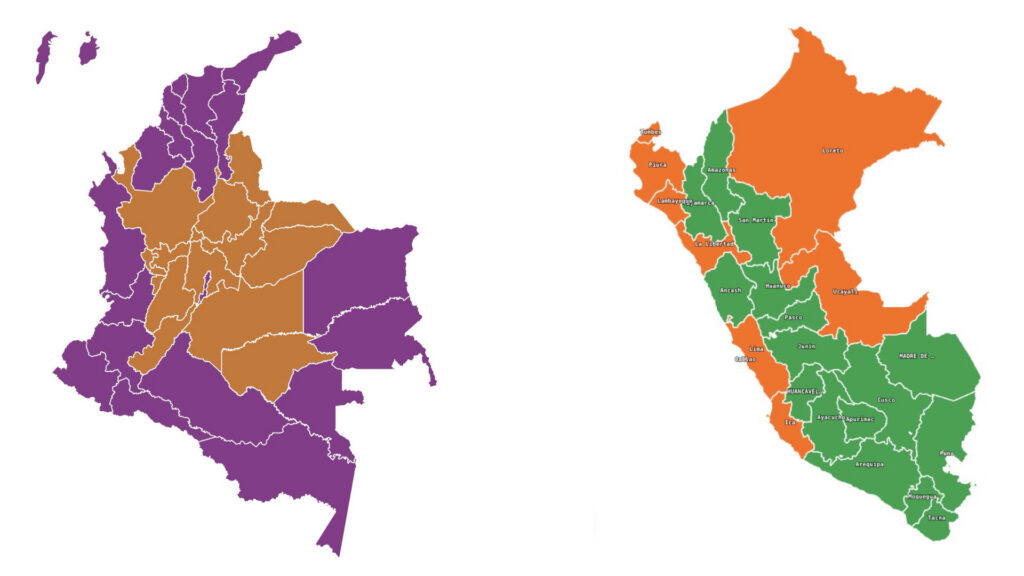
Not all of the picture is bleak. The program’s first call for “best practices in citizen security” drew 47 submissions, producing a public interactive map of violence-reduction projects across states from Chiapas to Chihuahua, like prison sports programs, urban design interventions, women-led violence reduction, and indigenous governance. Asked what a newly appointed security official should do, López Portillo emphasizes convening neighborhood leaders, business chambers, unions, cultural figures, and grassroots organizations; publicly accepting the problem; and building permanent consultation and evaluation mechanisms, neighborhood by neighborhood.
López Portillo closes with a regional warning: the rise of the “mano dura” in Latin America, he predicts, will normalize states of exception and Bukele-style practices adapted to each country, with growing popular acceptance, including among young people. The region, he fears, risks forfeiting the consolidation of constitutional democracy in the name of security.
Download this podcast episode’s .mp3 file here. Listen to WOLA’s Latin America Today podcast on Apple Podcasts, Spotify, iHeartRadio, or wherever you subscribe to podcasts. The main feed is here.