Ana María Méndez Dardón
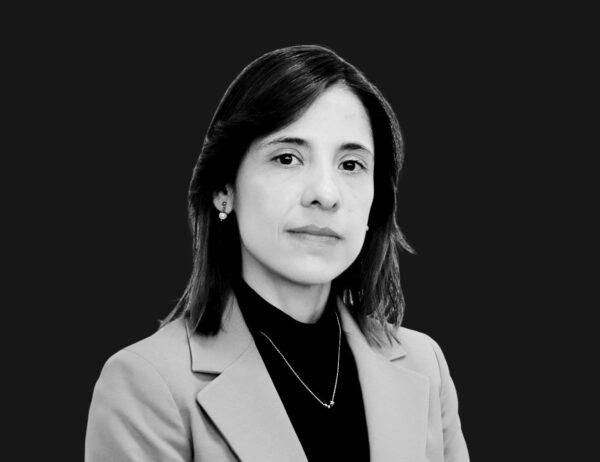
Ana María Méndez Dardón
Director for Central America
Ana María Méndez Dardón is the Director for Central America at the Washington Office on Latin America (WOLA). At WOLA,...The Ortega-Murillo government has not held genuinely free or competitive elections in Nicaragua for years. It systematically dismantled the conditions for electoral competition ahead of the 2016 elections and completed that authoritarian trajectory with the sham presidential elections of 2021, in which opposition leaders were jailed, political parties were eliminated, and independent voices were silenced.
The regime’s recent announcement that Nicaragua will no longer hold competitive presidential elections does not fundamentally change the country’s political reality. Rather, it seeks to transform a de facto dictatorship into a de jure one by formally abandoning even the pretense of democratic competition.
This decision is also an implicit acknowledgment of the regime’s political failure. After years of brutal repression, arbitrary detention, forced exile, deprivation of nationality, confiscation of property, and systematic violations of fundamental rights, the Ortega-Murillo government has been unable to eliminate the democratic aspirations of the Nicaraguan people. Instead of seeking legitimacy through the ballot box, it has chosen to institutionalize permanent authoritarian rule and impunity.
The United States and others in the international community, including European countries, should develop a coordinated strategy that raises the costs of the continued consolidation of a dictatorship in Nicaragua. Such a strategy, including the use of individual sanctions, trade and investment policies, and other diplomatic measures, should establish clear benchmarks and a defined timeframe for the conditions necessary for restoring democratic governance, including the reestablishment of political and civil liberties, respect for human rights, the release of those arbitrarily detained, guarantees for political participation, and the dismantling of the country’s police state. Given the authoritarian nature of the Ortega-Murillo regime, governments should additionally expand, not limit, measures to protect Nicaraguans fleeing persecution and increase support for independent civil society organizations and media outlets operating primarily in exile. Furthermore, governments should undertake coordinated actions within regional organizations, including the Organization of American States (OAS) and the Central American Integration System (SICA).
For their part, multilateral financial institutions, including the Central American Bank for Economic Integration (CABEI), the Inter-American Development Bank (IDB), the International Monetary Fund (IMF), and the World Bank, should also reassess their engagement with the Nicaraguan government, while ensuring humanitarian support for the population. Nicaragua presents the international community with an urgent test of its commitment to democratic principles. Allowing the Ortega-Murillo regime to consolidate a hereditary dictatorship without meaningful consequences would not only abandon the Nicaraguan people but also establish a dangerous precedent for democratic governance across Latin America.
Newsletter
Subscribe to get the latest on analysis and policy