This article was originally published in El País.
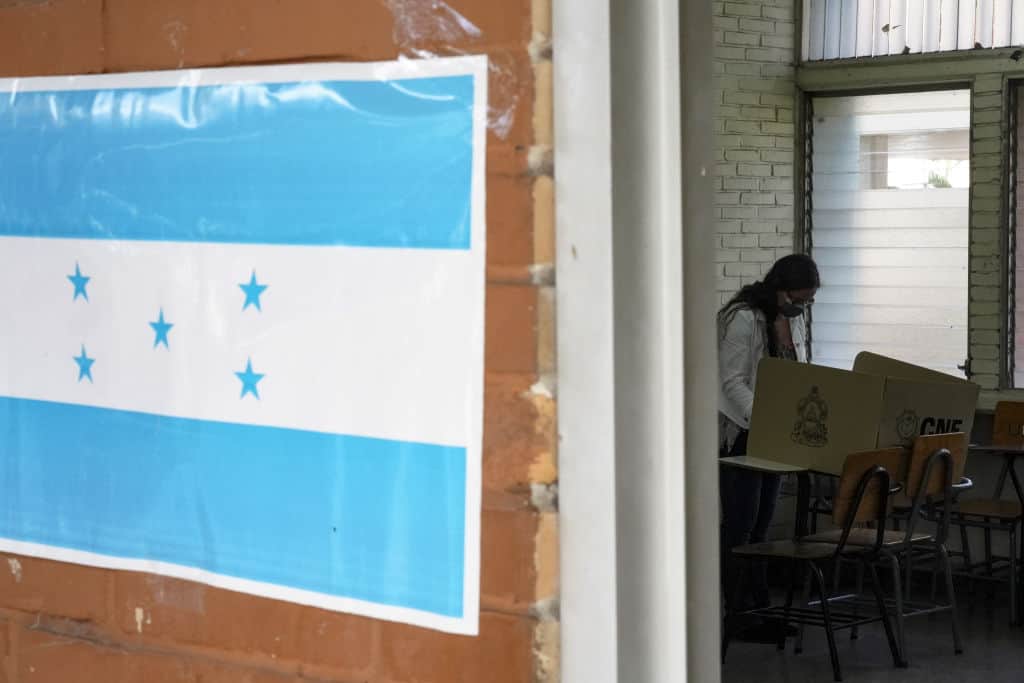
Honduras is heading toward general elections on November 30 that will play a decisive role in the country’s future. Voters will elect the next president, 128 members of the National Congress, and 20 representatives to the Central American Parliament. But there are reasons to fear that the right of Hondurans to free and fair elections is at risk.
The March primary elections were marred by logistical problems. Election materials arrived several hours late at polling stations in Tegucigalpa and San Pedro Sula–the country’s two largest cities. Some people had to vote during the night or the following morning, and in two centers, voting had to be repeated the following week.
This caused a public confrontation between the three members of the National Electoral Council (CNE), which weakened the institution’s credibility. As the body responsible for organizing the elections, its work was paralyzed. One of its members, Marlon Ochoa, stopped attending plenary sessions, while another member, Ana Paola Hall, attempted to resign, alleging threats against her and her family.
This institutional paralysis delayed the signing of the contract for the Preliminary Election Results Transmission System (TREP), which reports provisional results after the polls close. The original deadline established in Honduras’s electoral law expired in July. It was not until August 5 that the CNE reached a unanimous agreement on the terms for the system, and on August 7, Congress extended the deadline for awarding the contract until the 30th of this month.
Some of these problems are the result of serious structural deficiencies in the composition of the CNE. After the disputed 2017 elections, the country’s main political parties—the Liberal, National, and Libre parties—agreed to divide control of the council, appointing one member each. Election observers from the Organization of American States (OAS) and the European Union (EU) have noted that while this structure reflects the main political forces in the country, it undermines the CNE’s independence and hinders its technical functioning.
Concerns about the criminal prosecution of council members and opposition leaders have exacerbated the situation. In late July, Attorney General Johel Zelaya announced an investigation into the three CNE members for “treason,” “abuse of authority,” and other crimes. Zelaya claimed that there was a “conspiracy against the elections” that he would not “allow.”
The president of Congress, Luis Redondo, of the Libre party, asked the Public Ministry to investigate alleged coercion and threats against council members by members of the Liberal and National parties. OAS observers have warned of the risk of “excessive judicial intervention” that could affect the electoral process in Honduras. These recent events add to existing concerns about whether the elections will be fair.
Allegations of illicit campaign financing persist, particularly regarding links to drug trafficking. Political violence also poses a serious threat. According to the Office of the United Nations High Commissioner for Human Rights (OHCHR), the 2021 elections saw high levels of violence, including 32 homicides.
With the 2025 elections just a few months away, at least four mayoral candidates have already been killed. Analysts warn that departments such as Cortés, Olancho, Yoro, and Francisco Morazán, where high levels of violence and competitive elections converge, are particularly vulnerable.
The international community should take robust measures to safeguard Hondurans’ right to participate in free and fair elections. The OAS, which has already expressed concern about the elections, can play a key role by mediating between political parties, offering technical assistance for electoral organization, and deploying an observation mission to contribute to transparency. OAS member states should actively support these efforts.
The EU has also expressed interest in sending an observation mission. The experience of the 2023 elections in Guatemala and other countries in the region shows that the joint presence of OAS and EU missions can help protect electoral processes and strengthen the work of each mission. The Carter Center, invited by the government to observe the elections, could also play an important role. In addition, UN officials in Honduras and the diplomatic corps should consider whether they can facilitate dialogue between political parties in order to prevent further conflict and ensure a fair electoral process.
Foreign governments and leaders must support the will of the Honduran people, not their allies or preferred candidates. Hondurans have the right to decide who governs their country, and the international community must ensure that every vote counts and every voice is heard.