
2026 will be a pivotal year for Guatemala, as four institutions fundamental to democratic balance, governance, and the functioning of the rule of law will be renewing their mandates. International support is needed to act as a crucial counterweight to attempts by corrupt actors to infiltrate these processes.
The new bilateral relationship between Guatemala, under President Arévalo, and the United States, under President Trump, has maintained a pragmatic, stable, and collaborative approach. Notwithstanding some tensions regarding trade and migration, similar to other countries in the region, a political dialogue that prioritizes cooperation on security, migration, and trade has been established. Following the closure of the U.S. Agency for International Development (USAID), however, democracy, justice, and human rights are no longer central issues in cooperation and assistance to Guatemala.
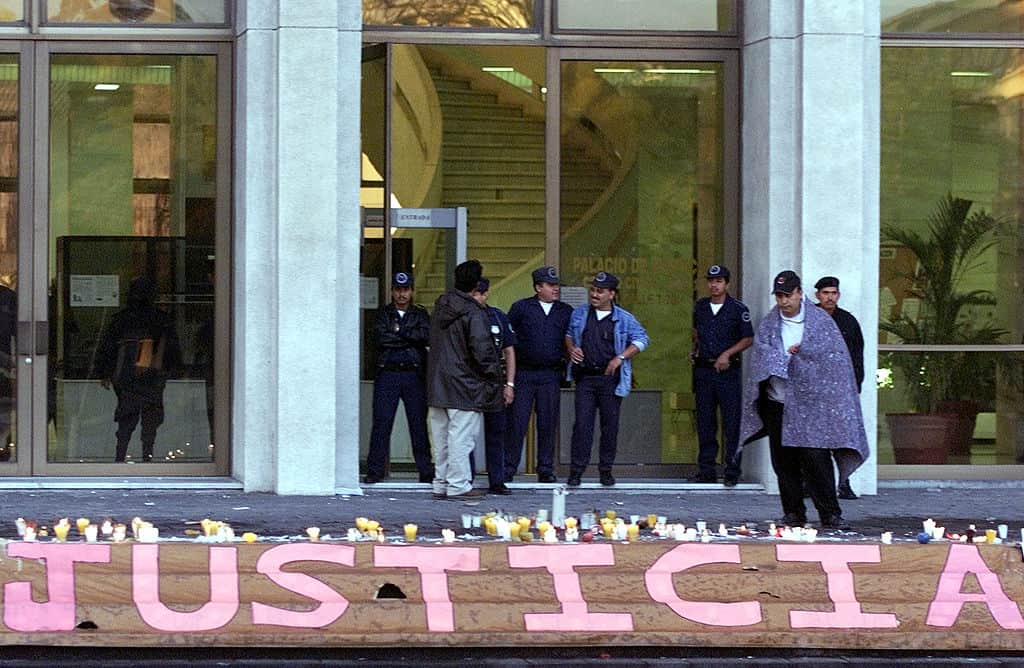
Since taking office in 2024, Bernardo Arévalo has proposed measures to restore democratic institutions in the country. However, his main obstacle has been the co-optation of the legislative branches and the judicial system, which, on the one hand, criminalizes its own officials and, on the other, protects the illicit networks that have operated with impunity for decades.
The United States needs reliable partners in the region to combat drug trafficking and transnational crime, and that requires a strong and autonomous judicial system.
The following questions provide context on the electoral processes that will take place in Guatemala and the reasons why the United States and other members of the international community should support policies and projects aimed at strengthening justice in Guatemala.
Which institutions’ mandates will be renewed, and how will they impact democratic stability in Guatemala?
Guatemala elects senior officials in its judicial system through nominating commissions–temporary bodies composed of representatives from academia, the judiciary, and other legal professionals–which are responsible for proposing candidates. Although these commissions are designed to ensure meritocratic and technical processes, in practice they have been subject to political manipulation.
The United Nations recently warned that the cycle of appointments to the Constitutional Court, the Attorney General’s Office, and the Supreme Electoral Tribunal could lead to a co-opted judicial system if these selection processes are not transparent.
Attorney General (MP): Consuelo Porras’ current term ends in May 2026, after eight years of serious setbacks in the pursuit of justice in the country. Her successor will set the course for the fight against corruption, justice for human rights violations, and the possibility of restoring the rule of law.
A recent study revealed that the MP has been ineffective, finding that between 2024 and 2025, 93.56% of criminal cases did not receive an adequate response.
Similarly, the Organization of American States (OAS) Observation Mission for the recent elections to the Supreme Court of Justice and the Court of Appeals (2024) documented and denounced that the MP threatened to criminalize members of the Postulation Commissions during the process. This generated fear among candidates, who refrained from participating for fear of judicial persecution. Therefore, preventive measures are necessary to prevent the use of criminal law as a tool to obstruct the Attorney General’s selection process.
Magistrates of the Constitutional Court (CC): The Court, composed of five magistrates, is the highest judicial body and guarantor of respect for and compliance with the Constitution. It is the only institution that the Nominations Commission does not appoint. The Supreme Court of Justice, the Bar Association, the President of the Republic, the Congress of the Republic, and the Higher University Council of the University of San Carlos de Guatemala each elect one representative and one alternate.
The current judiciary has made controversial judicial decisions. Initially, it acted as a protective shield in the 2023 elections, certifying the election results after numerous attempts to annul the electoral process. However, the CC subsequently confirmed the suspension and judicial annulment of Bernardo Arévalo’s party, Movimiento Semilla, severely limiting its political operations. In addition, it ordered its deputies to act as independents, dismantling the political party within Congress.
Supreme Electoral Tribunal (TSE) Magistrates: They will take office in March 2026 and will be responsible for ensuring electoral integrity, with the role of guaranteeing free, transparent, and fair elections for 2027 and beyond.
Their position reinforces the legitimacy of the political system and the elected government, serving as a pillar of the rule of law.
Comptroller General: A new authority will also be elected, which will have a direct impact on financial oversight and fiscal control. The comptroller plays a crucial role in the fight against corruption, as they are responsible for detecting any misuse of public funds.
Although the comptroller reports irregularities, many cases remain allegations without effective recovery or definitive punishment.
| Institution | Term Renewal 2026 | Who chooses? | Why is this important? |
| Public Prosecutor’s Office | (1) Election of the Attorney General 2026-2030 | Nomination Committee identifies a list of candidates, the President selects a candidate.. | Defines the capacity to fight corruption, drug trafficking, organized crime, human rights violations and impunity in general. |
| Constitutional Court | (5) Titular and substitute magistrates 2026–2031 | Elected by five important Guatemalan institutions. | Guarantees respect for the law and judicial oversight.. |
| Supreme Electoral Tribunal | (5) Magistrates 2026–2032 | Nomination Commission identifies list of candidates, Congress of the Republic elects. | Crucial for the integrity of the electoral process, guaranteeing free, transparent, and impartial elections. |
| Comptroller | (1) New comptroller for 2026-2030 | Nomination Commission identifies list of candidates, Congress of the Republic elects. | Strengthens state oversight and the fight against corruption. . |
Why should the U.S. and the international community include initiatives that support these processes in their foreign policy?
A healthy judicial system is fundamental to global efforts to combat corruption, impunity, and drug trafficking, which is of vital interest to the United States and the international community. The Guatemalan justice system plays a crucial role in investigating drug trafficking and requires a high level of investigative capacity to prosecute corrupt government officials linked to these drug trafficking networks. Without strong and independent judicial institutions, these links between organized crime and political power can operate with impunity, weakening regional security.
In the case of Guatemala, U.S. companies also require legal stability to invest in the country. A reliable justice system protects contracts and investments, which fosters bilateral trade and economic relations.
Although a greater number of projects previously administered by USAID have been preserved in Guatemala than elsewhere, the dismantling of the agency had a significant impact on various projects related to justice, governance, and human rights, especially in key areas such as the fight against corruption, the improvement of the judicial system, and the promotion of transparency.
Despite its retreat from foreign assistance, the Trump administration has strategic, economic, and security interests that justify active support for justice system reform in Guatemala.
Drug trafficking and organized crime: Guatemala is a key country along drug and human trafficking routes to the U.S. An independent judiciary allows for the prosecution of criminal structures that have often infiltrated the state, thereby weakening organizations like cartels and other trafficking networks.
| STATISTICS ON DRUG SEIZURES RECORDED IN THE NATIONAL TERRITORY FROM 2022 TO 2024, BROKEN DOWN BY TYPE OF DRUG AND YEAR | |||
| TYPE OF DRUG | YEAR 2022 | YEAR 2023 | YEAR 2024 |
| COCAINE KILOGRAMS | 5,950.30 | 5,037.01 | 16,007.83 |
| AMPHETAMINE KILOGRAMS | 0.40 | 0.03 | 0.00 |
| METHAMPHETAMINE KILOGRAMS | 2.92 | 23.38 | 3.40 |
| HEROIN KILOGRAMOS | 0.00 | 1.74 | 0.00 |
| CRACK KILOGRAMOS | 14.31 | 7.88 | 10.52 |
| POPPY PLANTS | 9,936,460 | 667,398 | 1,490,240 |
| MARIJUANA PLANTS | 5,414,670 | 1,735,465 | 2,142,701 |
| MARIJUANA PROCESSED LBS. | 4,559.06 | 1,664.54 | 2,413.15 |
| MARIJUANA SEEDS OZ. | 1,023.37 | 32.95 | 358.18 |
| COCA LEAF BUSH | 4,054,585 | 8,904,889 | 5,541,611 |
| ECTASY GRAMS | 415.00 | 81.00 | 16.00 |
| SOURCE: DEPUTY DIRECTORATE GENERAL FOR ANTI-NARCOTICS INFORMATION ANALYSIS | |||
Although the Arévalo administration has made an effort to combat drug trafficking networks, the Attorney General’s Office under Consuelo Porras has made no progress in investigating, prosecuting, and dismantling these groups. On the contrary, it has obstructed the progress of justice, as reported by the U.S. Bureau of International Narcotics Affairs (INL) in its latest international report on narcotics control strategy.
Fight against corruption: Organized crime in Guatemala has infiltrated public institutions, allowing drug trafficking and other illicit activities to flourish. This poses a direct threat to regional security and, by extension, to the national security of the United States.
Since 2024, the National Anti-Corruption Commission has reported 283 complaints, of which 25% have been archived or dismissed by the Public Prosecutor’s Office.
Forced migration: Migration to the United States and other parts of the world has been driven not only by economic reasons but also by violence, persecution, and lack of access to justice. In 2024, more than 204,000 Guatemalans were recorded at encounters on the U.S.-Mexico border, and as of 2025, there have been more than 33,000 reports. The population of undocumented Guatemalan migrants in the United States has grown significantly in the last decade, from 506,000 in 2010 to 1.4 million in 2023, reflecting the sustained impact of structural factors that drive migration.
In addition to cooperation to investigate and dismantle human trafficking and smuggling networks, it is crucial to support judicial independence in Guatemala to address the structural causes of historical migration, without abandoning access to international protection and the need for other legal alternatives to migrate.
Investment and economic development: U.S. companies seek stable and transparent environments in which to invest. As international bond rating agencies have made clear, a reliable judicial system and a strong rule of law are important for protecting foreign investment, promoting the formal economy, and reducing risks to bilateral trade.
How can we ensure that these processes are transparent and meet minimum standards?
2026 will be a turning point: if appointments are transparent, meritocratic, and independent, it could mark the beginning of a real transformation of the judicial and democratic system in Guatemala. If, on the contrary, these processes are co-opted, a system could be consolidated where the law serves the interests of organized crime networks and other corrupt actors rather than the citizenry. Civil society oversight, international observation, and political will will be essential to ensure that these appointments truly strengthen justice and do not weaken it.
In addition to strengthening civil society groups that closely monitor these processes and report irregularities, it is crucial to establish independent international mechanisms that can also observe, document, report irregularities, issue recommendations to exclude questionable individuals from contention, and appoint suitable replacements.
What kind of measures can the United States and other members of the international community implement?
Within the framework of its diplomatic and cooperative relationship with Guatemala, the international community, including the U.S. government, can offer several types of concrete measures to promote independent justice in Guatemala.
Support for civil society and independent media: Initiatives that strengthen citizen oversight and transparency should be funded, helping the population and the media to demand accountability. Civil society organizations play a vital role in identifying irregularities, highlighting candidates who do not meet eligibility requirements, and filing legal appeals to prevent undue interference in the process.
Support for international observation missions: Support the creation of international observation missions that can help ensure that selection processes are free from political interference. This includes any initiative by multilateral bodies such as the Organization of American States (OAS) and the European Union (E.U.).
Use of individual sanctions: The United States can impose targeted sanctions on corrupt individuals—such as politicians, judges, businesspeople, or officials—who have participated in acts of corruption, criminalization, obstruction of justice, and attempts to influence the Nominating Commissions. In addition to visa cancellations and bans on entry into the U.S., individual financial sanctions have been shown to be more effective.
To date, the U.S. Department of the Treasury’s Office of Foreign Assets Control (OFAC) has designated more than 60 individuals, including 14 under the Global Magnitsky Act, for their involvement in both political activities and organized crime. Similarly, between July 2021 and December 2023, 52 sanctions were imposed on Guatemalan individuals under Section 353 (30 for corruption and 24 for anti-democratic actions). The State Department has revoked or denied visas to multiple individuals for “significant corruption” or actions against democracy. Examples include figures such as Luis Miguel Martínez, former President Alejandro Giammetei’s advisor, and Nester Vásquez Pimentel, current magistrate of the Constitutional Court.
Diplomacy and international pressure: In coordination with other countries in the region and the E.U., use diplomatic mechanisms to support judicial reforms and denounce setbacks in judicial independence.
Support for reform of the civil service selection system: It is essential that various social and political actors in Guatemala engage in dialogue to discuss reforms to the design of the civil service selection system. In its latest report, the OAS noted that “the model of nomination commissions is exhausted due to the negative dynamics and incentives it has generated and allowed political operators to influence the process.”
This reform must take into account the inclusion of vulnerable and excluded groups in these processes, such as women and indigenous peoples. Both the United States and other countries must support structural and long-term changes that guarantee the rule of law, judicial independence, and democracy in Guatemala.