Just 47 days before Brazil’s first-round election, U.S.-Brazil relations have entered a particularly sensitive period. What was framed as a trade dispute has increasingly converged with Brazil’s 2026 presidential campaign, raising concerns about U.S. involvement in domestic politics. Since the Trump administration confirmed a 25 percent Section 301 tariff on Brazilian goods alleging unfair trade practices in mid-July, and an additional 12.5 percent tariff in late July as part of a Section 301 action alleging forced labor in many of the world’s economies, trade, diplomacy, and electoral politics have become increasingly intertwined.
On July 20, the U.S. granted permanent residency to Eduardo Bolsonaro following his conviction over efforts to persuade U.S. officials to sanction Justice Alexandre de Moraes since he was the judge who convicted his father for plotting a coup to stay in power after losing the 2022 election. While residency does not prevent extradition, the move underscores the Trump administration’s continued involvement in the Bolsonaro family’s legal and political disputes.
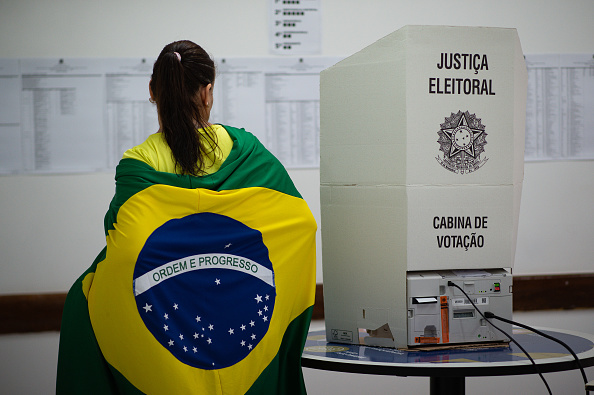
The electoral dimension sharpened the next day, when presidential candidate Flávio Bolsonaro told foreign ambassadors that Brazil’s electronic voting system was unreliable. Some diplomats reportedly saw the remarks as laying groundwork to challenge the October election results if Lula wins reelection. Observers also drew parallels with Jair Bolsonaro’s similar 2022 meeting with ambassadors, which contributed to his disqualification from public office. Flávio defended his father’s actions as legitimate concerns about electoral transparency, prompting several parties to consider legal action against him.
Concerns about direct U.S. involvement also intensified after reports that State Department officials Riley Barnes and Samuel Samson sought visas to visit Brasilia from July 27-30 to meet officials, religious leaders, and Flávio Bolsonaro and discuss electoral integrity and freedom of expression.
Although the State Department called the visit routine, Brazil’s Foreign Ministry denied the visas, reportedly citing concerns about U.S. involvement in the electoral process.
The failed visit also drew criticism in Washington. On July 28, Senate Foreign Relations Committee Democrats accused the Trump administration of promoting election conspiracy theories about Brazil, evidencing concerns about the Trump Administration’s actions.
Brazilian media also report that the U.S. Consulate in São Paulo held closed-door meetings with conservative digital influencers on free expression and the digital environment. The lack of explanation about the purpose of these meetings and the participants’ role has fueled further scrutiny of U.S. political engagement in Brazil’s election process.
On July 29, the Trump administration renewed the national emergency on Brazil under Executive Order 14323, reiterating accusations against Brazil’s Supreme Federal Court and its treatment of Jair Bolsonaro. While imposing no new measures, the renewal preserved the legal framework for further U.S. action.
The crisis escalated on August 4, when the State Department revoked the visa of Brazilian Ambassador Maria Luiza Ribeiro Viotti—the first such action in more than two centuries of U.S.-Brazil relations. A State Department spokesperson called it a reciprocal action tied to Brazil’s delay in approving Daniel Perez as the U.S. Ambassador to Brazil and said Viotti would regain her visa once Brasília approved Perez. Brazil repudiated the decision as a deliberate escalation inconsistent with a relationship historically based on mutual respect.
Brazilian opinion may also be shifting away from Washington. A July 24 PoderData survey found that most Brazilians favor stronger trade ties with China, now Brazil’s largest trading partner, while 42 percent said a Trump endorsement would hurt a presidential candidate.
Argentina and China React to Developments
That same week, Brazil’s geopolitical strains deepened. On July 25, Javier Milei attended the Liberal Party convention in São Paulo nominating Flávio Bolsonaro, then criticized Lula and Justice Alexandre de Moraes, prompting Brazil to recall its ambassador from Buenos Aires.
Days later, Lula spoke with Chinese President Xi Jinping, who publicly backed Brazilian sovereignty and opposed foreign interference. Combined with shifting trade and public opinion, U.S. pressure may be accelerating Brazil’s economic and diplomatic tilt towards China.
Taken together, these developments point to a Brazilian campaign season increasingly shaped by foreign actors. The U.S. becoming one of the protagonists in the October elections. This helps explain Brazil’s more assertive diplomatic posture and Beijing’s framing of its ties with Brazil around sovereignty and opposition to external interference.