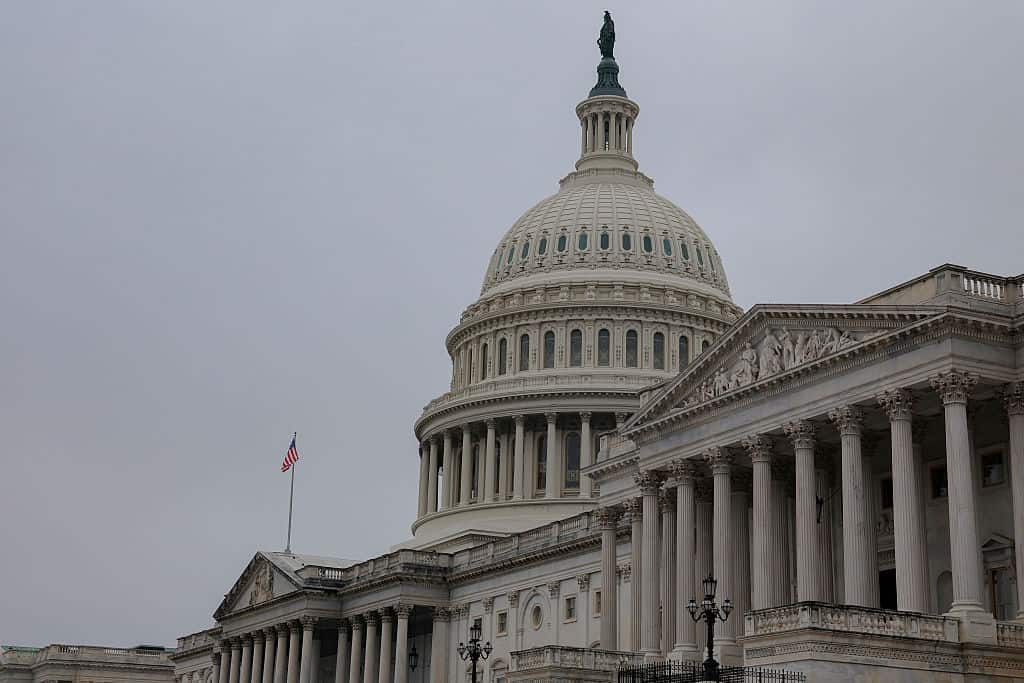

The slashing of U.S. foreign assistance in 2025, coupled with the dismantling of USAID, painted a grim outlook for the future of U.S. aid and the role of “soft power” as an essential diplomatic tool. While severe harm has already been done, the foreign aid bill for fiscal year 2026 seeks to partially reverse that damage. The National Security, Department of State, and Related Programs Appropriations Act, approved in a bipartisan manner in Congress and signed into law by President Trump on February 3, 2026, suggests that Congress is working to reassert its legal authority over the U.S. federal budget and is willing to break with the administration on several foreign assistance priorities.
The $50 billion appropriated for diplomacy and assistance–while nearly $9.3 billion less than current levels (apart from rescissions)– is almost 60 percent more than the administration requested ($31.5 billion) and allocates funding for a broad array of priorities, including support for multilateral institutions and funding areas the administration had sought to reduce or eliminate.
Below are five key takeaways from the FY2026 foreign aid budget related to human rights, democracy programming, and other areas of U.S. support for Latin America.
- Congress keeps democracy and human rights on the agenda
The House report accompanying the foreign aid bill, which provided binding directive language for the legislation, states that the Committee on Appropriations “believes strongly that defending democracy and human rights is fundamental to United States national security.” This belief is reflected in funding priorities, such as $205 million for a Human Rights and Democracy Fund administered by the Bureau of Human Rights, Democracy, and Labor at the State Department. That is around forty percent less than prior years’ allocations, but still significant, as the State Department’s FY2026 budget request had eliminated this fund entirely. Congress also appropriated $315 million to support the National Endowment for Democracy (NED) and its core institutes, including over $104 million for democracy programs, funding that the administration had also sought to eliminate.
In total, the bill states that $2.175 billion should be made available to support democracy programs under the National Security Investment Programs, Democracy Fund, and International Narcotics Control and Law Enforcement (INCLE) accounts. These are defined as “programs that support good governance, credible and competitive elections, freedom of expression, association, assembly, and religion, human rights, labor rights, independent media, and the rule of law, and that otherwise strengthen the capacity of democratic political parties, governments, nongovernmental organizations and institutions, and citizens to support the development of democratic states and institutions that are responsive and accountable to citizens.” The bill allocates specific support for democracy programs in Venezuela ($50 million), Cuba ($25 million to promote democracy and support civil society), and Nicaragua ($15 million for democracy and religious freedom programs).
The joint explanatory statement accompanying the final bill also maintains that a priority for assistance to Latin America is programs that “advance democracy, constitutional order, and human rights, including for countries that demonstrate commitments to such norms, including by cooperating to counter regional and global authoritarian threats.” Specific funding is provided to support human rights in Colombia ($15 million) in addition to $25 million under the National Security Investment Programs to support Afro-Colombian and Indigenous communities. This is important given the administration’s efforts to end such programs and distance itself from the promotion of human rights and democracy as core elements of U.S. foreign policy globally.
- Congress maintains many core conditions on assistance to Latin America
The bill and explanatory statement include detailed directives for U.S. assistance to Central America, Colombia, Mexico, and other parts of Latin America, holding up some assistance until certain conditions are met. WOLA supports many of these conditions on assistance.
For Central America, funding priorities include support to combat corruption and impunity, reduce violence against women and girls, and for locally led development in El Salvador, Guatemala, and Honduras. Likewise, the bill conditions 50 percent of select funds under the newly created National Security Investment Programs account (encompassing the legally authorized Development Assistance and Economic Support Funds accounts, among others) for these three countries until the State Department reports to Congress, among other conditions, that their governments are combatting corruption and impunity; implementing reforms, policies, and programs to strengthen the rule of law, the independence of judical and electoral institutions; and protecting the rights of human rights defenders, trade unionists, journalists, and others in civil society. Funds are also conditioned on administration priorities like stemming mass migration and cooperation to counter drug trafficking and human smuggling.
U.S. assistance to Colombia conditions 25 percent of INCLE funds on progress on reducing coca cultivation and continuing cooperation with the U.S. on counternarcotics, while 20 percent of the Foreign Military Financing funds for Colombia are conditioned on certifying whether Colombia is making progress on issues including “sentencing perpetrators of gross violations of human rights, including those with command responsibility; … making progress in reducing threats and attacks against human rights defenders and other civil society activists, and judicial authorities are prosecuting those responsible for such attacks; and the Government of Colombia is making progress in protecting Afro-Colombian and Indigenous communities including respecting their rights and territories.” These conditions are similar to those appearing in prior years’ legislation.
Contrary to the human rights reporting requirements on U.S. assistance in Mexico that were in place for many years, current restrictions on Mexico are primarily related to progress made on water delivery to the United States, as well as stemming the flow of illicit drugs, particularly fentanyl, along with dismantling and holding “accountable transnational criminal organizations.” Human rights concerns do not appear in the Mexico conditions.
- Combating organized crime and illicit drug trafficking remains a priority
As is clear from the funding for, and conditions on, assistance to Mexico, Colombia, and Central America, addressing the illicit flow of drugs continues to be a central issue for Congress. Although the State Department’s budget request affirms that “through INCLE assistance, American lives will be saved by disrupting and deterring the illicit flow of synthetic drugs, including fentanyl, and their precursor chemicals in other countries,” the request was a mere $125 million in the INCLE account for the entire world, down from an estimated $1.285 billion in FY2025. The reduction was framed as a “strategic pause” in requesting additional funds, using prior-year balances to continue funding programming. Congress, however, continues to favor robust annual INCLE funding, which principally provides military, police, and judicial assistance for counter-drug and counter-crime purposes. The FY2026 bill appropriates $1.4 billion for the account worldwide. Additionally, the bill stipulates that not less than $150 million from the National Security Investment Programs and INCLE accounts “shall be made available for programs to counter the flow of fentanyl, fentanyl precursors, and other synthetic drugs into the United States.”
- Support for regional bodies and grassroots development
The Organization of American States (OAS) was one of many international organizations subject to the February 2025 executive order to determine if they are “contrary to the interests of the United States,” and assess U.S. membership and support. However, the OAS was not among the 66 international organizations the administration announced it was withdrawing from in January 2026, and the United States remains a member state. In 2025, the administration also presented and actively campaigned for Commissioner Rosa María Payá as the U.S. candidate to the Inter-American Commission on Human Rights, the OAS’s human rights body. While the administration did not request specific funds for the OAS in 2026, the House report provides $46.5 million, similar to FY2024 levels.
The bill itself stipulates that prior to obligating funds to the organization, the Secretary of State shall submit a report to Congress regarding how the United States is using its voice and vote for various measures, including to “implement budgetary reforms and efficiencies within the Organization; eliminate arrears, increase other donor contributions, and impose penalties for successive late payment of assessments… [and] prioritize areas in which the OAS has expertise, such as strengthening democracy, monitoring electoral processes, and protecting human rights,” among other measures. The joint explanatory statement and House report both affirm that “The Secretary of State should consider voluntary contributions to the Organization of American States for human rights and democracy programs, consistent with the Organization’s charter commitments to promote representative democracy and protect human rights.”
For its part, the Inter-American Foundation (IAF), a 56-year-old independent U.S. government agency that implements an innovative localized development model across Latin America and the Caribbean, continues to receive bipartisan support for its mission. While the $29 million appropriated to the IAF for FY2026 is well below the $47 million the foundation received in recent years, FY2026 funding is greater than FY2025, given that the administration rescinded $27 million last year. The funding will allow the Foundation to continue with its critical mission, albeit in a more limited capacity.
- Mixed support for migrants and refugees
The 2026 law takes many existing foreign aid budget accounts authorized by law and pools their funds into new programs labeled to reflect the Trump administration’s effort to break with past priorities. As part of these changes, the Migration and Refugee Assistance account, along with International Disaster Assistance, has been consolidated into an International Humanitarian Assistance account. The bill appropriates $5.4 billion for this area, almost $3 billion above the administration’s $2.5 billion request. However, aside from designating $2.97 billion for international disaster relief and $6.5 billion for refugees resettling in Israel, there is no breakdown available for how funding in the IHA account would be distributed. An additional $100 million is appropriated through a separate U.S. Emergency Migration and Refugee Assistance fund.
In FY2023 alone, over $543 million in funds were obligated for the Western Hemisphere and administered through the Bureau of Population, Refugees, and Migration at the State Department, with the majority of these funds supporting the needs and integration of Venezuelan migrants and refugees who have settled throughout the region. This support for receiving countries sought, among other objectives, to prevent secondary migration, including U.S.-bound migration.
The joint explanatory statement suggests that at least some funds could continue to be designated for this purpose. Among the priorities for Latin America are programs that “address the violence, poverty, corruption, and other factors that contribute to irregular migration to the United States, including for countries that demonstrate a commitment to offsetting large scale migration and combating human trafficking.” The statement also mandates a report from the State Department to the Committees on Appropriations “detailing opportunities to deter unlawful migration flows from reaching the United States by assisting partner governments in the Western Hemisphere with diplomatic efforts and assistance programs that enable successful resettlement in host and transit countries.”
This contrasts with the Trump administration’s view of this challenge. In off-the-record exchanges with diplomats, WOLA staff learned that high-level officials place little value on preventing secondary migration. Since the January 2025 suspension of asylum access caused migration to plummet at the U.S.-Mexico border, the administration believes the migration crisis is over.
Congressional oversight moving forward
While the FY2026 foreign aid bill’s rollback of some of the Trump administration’s most draconian cuts is a welcome development, over the past year, the Trump administration has shown its willingness to disregard congressional funding directives and restrict funding. Additional challenges stem from the State Department’s uncertain capacity to administer funds in the absence of USAID and amid its own massive staff cuts.
Likewise, for many key funding priorities, questions remain about how this administration will determine what to fund to promote democracy and human rights after distancing itself from universal human rights in favor of “God-given natural rights,” ceasing commentary about the integrity of electoral processes, downplaying the human rights abuses of allied states, and seeking to influence electoral outcomes.
By passing a foreign aid budget that pushes back on some of the administration’s most radical proposed changes, Congress—in a bipartisan way—asserted the legislative branch’s independence. Now, it must do the hard work of enforcing that assertion. Beyond close examination of required reports, Congress will need to robustly exercise its oversight authority to ensure that appropriated funds are truly apportioned as stipulated, that the administration provides detailed information on spending plans and the capacity to administer funding priorities, and that the funding directives in the explanatory statement and report are more than just statements of good intentions.