
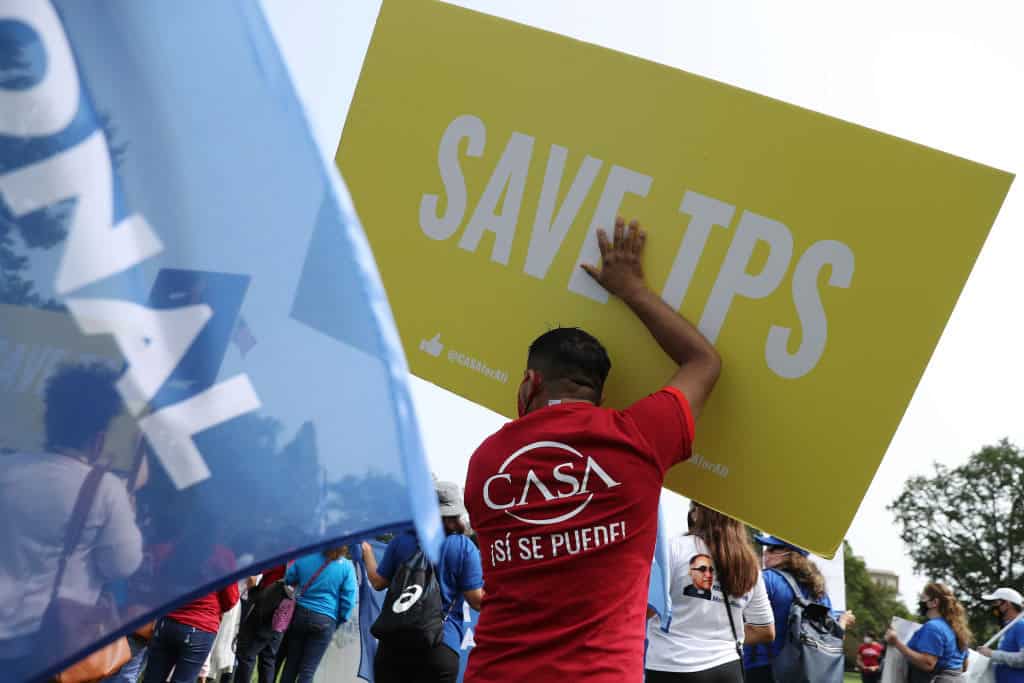


The termination of Temporary Protected Status (TPS) for El Salvador is taking place against a backdrop of a severe deterioration of democracy and human rights in the country. During its more than seven years in power, Nayib Bukele’s government has weakened institutional checks and balances, curtailed due process guarantees, and expanded the power of the security forces. The state of exception, originally implemented to combat gangs, has led to mass incarceration, arbitrary detentions, political imprisonment, and numerous allegations of human rights abuses and violations.
While El Salvador has achieved a historic reduction in homicides and a significant weakening of gang structures, these advances cannot be assessed in isolation from the serious setbacks regarding the rule of law. For Salvadorans who might be returned, the risk no longer stems solely from criminal violence: under certain circumstances, the state itself may pose a threat to their safety and fundamental rights.
In this context, the United States decided not to renew the TPS Salvadorans have held since 2001, as it has done for all other nationalities that have benefited from TPS for many years. Only people from Ukraine, Lebanon, and Sudan currently have valid TPS, and all of these expire before the end of 2026. The measure will affect about 232,000 people, a figure that rises considerably when you include their family members.
A multifaceted impact
The first effect is personal and familial. Ending TPS could separate families who have built lives in the United States for more than 25 years and have deep ties to their communities. More than 150,000 children who are U.S. citizens have at least one Salvadoran relative with TPS.
The second impact is economic. Family remittances have sustained the Salvadoran economy for decades and currently account for 24% to 26% of Gross Domestic Product (GDP). A significant reduction in this income due to the termination of TPS—in addition to the U.S. government’s policies of detaining and deporting undocumented migrants in the country—would have major effects on Salvadoran households and on an economy already facing low levels of growth and foreign investment.
The third, and most concerning, is the impact on security and human rights. Various international organizations have documented arbitrary detentions, torture and ill-treatment, enforced disappearances, violations of due process, and other serious abuses committed under the state of emergency. There are also concerns about the use of judicial institutions to persecute individuals considered critical of or a nuisance to the government.
TPS was established in light of conditions in certain countries that “temporarily prevent their nationals from returning safely or, in certain circumstances, when the country is unable to adequately manage the return of its nationals.” Therefore, conditions for return should not be assessed solely on a reduction in homicides. The safety of returnees also depends on democratic institutions, judicial safeguards, and effective mechanisms for protecting human rights.
Furthermore, the termination of TPS should not be viewed as an isolated immigration decision. The United States must recognize that it is making decisions regarding return to a country where democratic decline and human rights violations remain a cause for serious concern. Any policy toward El Salvador should, therefore, protect the rights of those affected and prevent security or immigration considerations from ultimately taking precedence over the principles of democracy, the rule of law, and human rights.