The Movement for the Victims of the Regime in El Salvador (MOVIR), which brings together family members and advocates for people deprived of liberty under the state of exception, is the recipient of the 2025 WOLA Human Rights Award.
Prisons across Latin America were already bursting at the seams when the “Bukele security model,” characterized by a state of exception that has led to unprecedented numbers of detentions and mass incarceration, began to be embraced by other politicians who have mimicked punitive and militarized discourses and policies thought to be politically popular. The excessive use of pretrial detention for even minor offenses, a surge in political imprisonment in countries including Venezuela and Nicaragua, and, in some cases, arrest quotas have all fueled the growing number of people behind bars in the region. The pictures of men packed into El Salvador’s Terrorism Confinement Center (CECOT) are etched into people’s minds. But the trauma and challenges suffered by family members of those people behind bars have largely been invisible – until now.
Establishing rights for family members of incarcerated individuals
In August, the OAS’s Interamerican Commission on Human Rights (IACHR) published a historic resolution, The Rights of Family Members and Persons with Affective Ties of Persons Deprived of Liberty. According to the IACHR, it “recognizes the impacts experienced by people whose relatives are incarcerated and calls on States to adopt measures to safeguard their rights in this capacity.” It is the first time that the rights of family members of people in prison have been incorporated into the Inter-American Human Rights System. Moreover, the resolution adopts a broad definition of family member, as “any person who maintains a kinship bond that makes him or her relative to the person deprived of liberty, whether by blood, legal, by affinity or by choice, including whom has an affective bond derived from frequent contact and trust, without time limits and without any form of discrimination.” The resolution shines a spotlight on the vast caregiving and other responsibilities assumed by family members, as well as the stigma, discrimination, violence, and other challenges that they face.
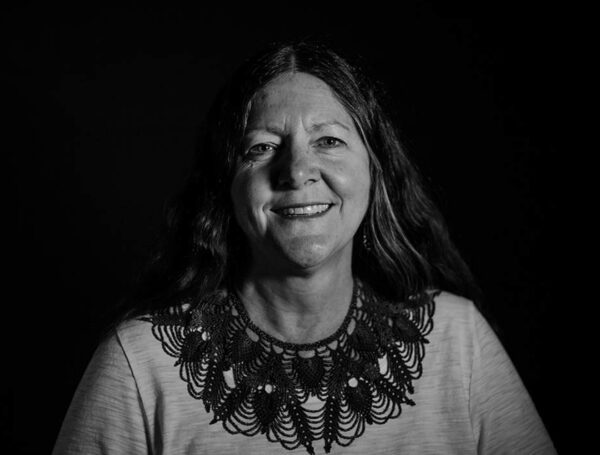
Jolted out of her comfortable middle-class life, Andrea Casamento recounts, “When my son was detained and sent to a maximum-security prison in Buenos Aires, falsely accused of stealing three tacos, I had no idea what a prison was like; it was not part of my world. I had to stand in long lines to get into the prison to take my son basic necessities, like food and blankets, only to watch them be torn up by guards searching visitors, during which I was stripped naked. It was humiliating and infuriating. And I had to learn to navigate an opaque and bureaucratic justice system.” After 8 months in the maximum security prison, her son was acquitted of stealing the three tacos.
Standing in line to get into the prison, Casamento began meeting other women facing the same fate. As more and more women sought out support and advice, she and others founded The Civil Association of Families of Individuals Detained in Federal Prison (ACIFAD), an Argentine organization of family members of people in prison. In addition to supporting fellow family members, including with legal assistance and mental health needs, ACIFAD successfully advocated for the government to provide a universal allowance for children of families whose primary breadwinner is incarcerated. (Andrea Cassamento’s story is the inspiration for a new Netflix movie, La Mujer de la Fila.)
In 2021, ACIFAD joined with other women-led organizations of family members in Latin American countries and Spain to form the International Network of Persons Deprived of Liberty (RIMUF), which advocates for the rights of family members. (WOLA supports RIMUF as an allied organization.) RIMUF points out, “Most of those who visit, care for, and maintain ties with incarcerated persons are women: mothers, sisters, daughters, wives, partners, companions, or friends. Even in the case of incarcerated women, it is mainly other women who maintain ties and accompany them.” These women take on multiple burdens; they often have to work more to replace household income, while having to provide the basic necessities needed for their loved one in prison to survive. While those behind bars in the United States receive sorely inadequate food and other basic necessities, in most places of detention in Latin America, family members are literally a lifeline. They have to provide food, soap, blankets, medicines – whatever is needed to survive. In short, they are forced to make up for governments’ failures to meet the basic human needs of those that they have put in situations of confinement.
A comprehensive study carried out by RIMUF concludes that for every person behind bars, at least five people in their immediate family environment are impacted (the vast majority of which are women with children). In addition to the economic burdens, female family members do not have the time or money to take care of themselves, resulting in increased physical and mental health problems. They routinely report that they are discriminated against, even by friends and other family members, and are mistreated and denied accurate information from judicial and prison authorities. The lives of children whose parents are in prison may be permanently upended, leading to a variety of mental health challenges. Some drop out of school early to work or assume responsibility for younger siblings, while others may end up living on the street.
Families in El Salvador Unite and Speak Out
The situation of family members of people deprived of liberty in El Salvador is particularly dire, as the government restricts access to people in prison, especially in maximum-security prisons. They may not even know where their loved one is being detained or have access to information about pending charges or judicial processes. If they cannot enter the prison, they must hand over packages for those inside to guards, who may or may not deliver them intact. While family members of people deprived of liberty face constant discrimination and stigma, in El Salvador, they also routinely face surveillance, threats, and intimidation.
Moreover, people in prison in El Salvador are dying at alarming rates; one estimate states that at least 430 people died while in detention between the initiation of the state of exception and August 2025. When these deaths occur, family members may hear by word-of-mouth, and they often cannot obtain basic information about the circumstances. As WOLA has pointed out, “This veil of secrecy not only deepens the families’ grief but also effectively shields detention conditions and potentially unlawful treatment from public scrutiny.” The human toll this takes upon families and communities is immeasurable.
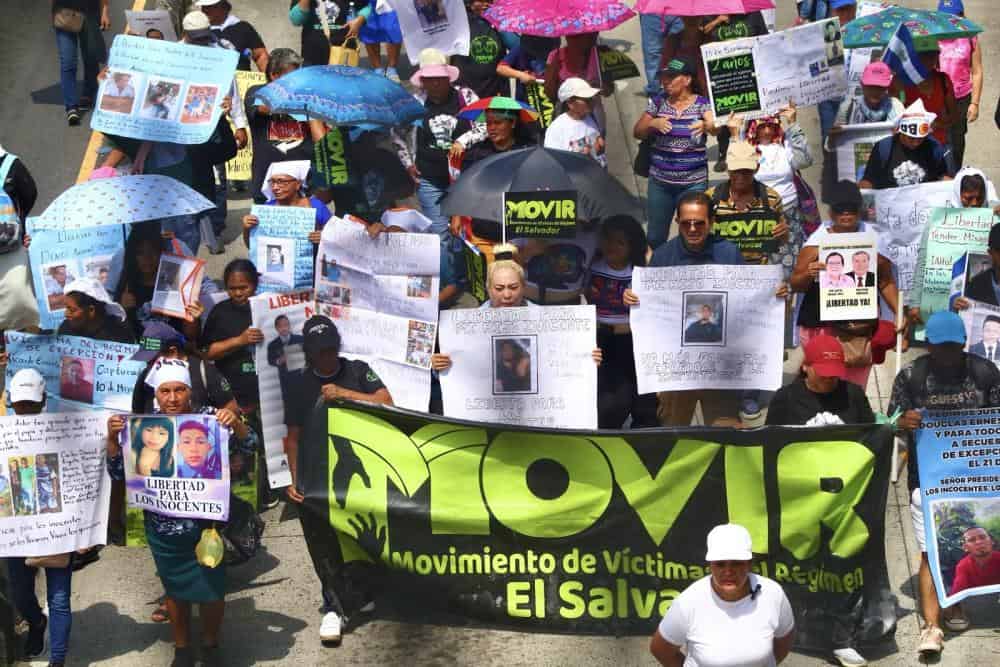
Despite the risks, family members and advocates have come together in the Movement for the Victims of the Regime in El Salvador (MOVIR). Recipients of WOLA’s 2025 Human Rights Award, MOVIR began in 2022 in response to the state of exception and the explosion in detentions and incarceration that it unleashed. According to one of its members, Samuel Ramírez, “MOVIR arose from human rights violations. We said that there was no other option but for the victims to organize themselves and demand their rights. And that is how MOVIR came about. MOVIR is made up of victims of the regime, that is, people who have family members, siblings, children, or spouses who have been deprived of their liberty.” Like their counterparts in Argentina and other countries, MOVIR supports family members by connecting them to support groups, resources, and legal aid; documents and denounces prison conditions; and organizes marches and protests to bring visibility to the issue. In the face of tremendous odds, they are bravely advocating on behalf of those unjustly detained under the state of exception in El Salvador and their families.
Across the region, family members of people deprived of liberty are coming out of the shadows and demanding respect for their rights, as well as for their loved ones behind bars. RIMUF’s founding in 2021 marked a turning point in uniting women-led organizations of family members around regional advocacy initiatives. One concrete result, described above, is the IACHR resolution, The Rights of Family Members and Persons with Affective Ties of Persons Deprived of Liberty, which incorporates the rights of family members into the Inter-American Human Rights System. That resolution provides a roadmap for policymakers seeking to adopt policies that ensure the basic human rights of people deprived of liberty and their families, covering a myriad of issues including bringing visibility and support to family members; giving priority to maintaining family ties; ensuring dignified conditions for visits, especially for children; prohibiting invasive and intrusive searches of visitors; prioritizing the best interests of children and the right to family life; and providing clear and accessible information to family members, including about health conditions and death.
What is now needed is political will on the part of the OAS’s member states, including El Salvador, to implement the IACHR’s comprehensive recommendations. Most importantly, the trend of increasing incarceration as a means of gaining political points, addressing perceived societal problems (while ignoring their roots), or silencing dissent must be reversed. The profound damage that incarceration inflicts on families and communities must be recognized and addressed – prioritizing the rights of children and keeping families together is essential for promoting more just and equitable societies.