It was horrendous enough that a South American military dictator sent assassins to the U.S. capital to kill Chile’s most prominent exile leader, together with a young woman who was an American citizen. When a bomb exploded in a car rounding Sheridan Circle on Washington’s Embassy Row on September 21, 1976, it was the first terrorist attack by a foreign power to occur in the U.S. capital. The public spectacle and terror were intentional, aimed at intimidating opponents of Chile and the other South American dictatorships. The terror was magnified by the revelation, in subsequent years, of the existence of Operation Condor, a consortium of military governments organized to track down, kill, and torture hundreds of exiles and other activists around the world.
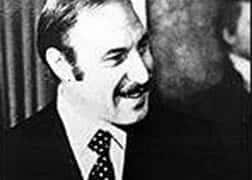
The target in Washington was Orlando Letelier, Chile’s former foreign minister and ambassador to the United States. He was not the first nor the last exile leader to be assassinated abroad. The FBI, in solving the crime, accused Chile’s security force DINA of carrying out the hit, but also established that it was part of a broader international plot. The FBI’s agent in Argentina, Robert Scherrer, discovered that Chile, Argentina, and Uruguay had launched a military operation, named Condor after Chile’s national bird, which was dispatching assassination teams to Europe and Mexico, in addition to the United States. The alliance included Brazil, Bolivia, and Paraguay. Together, the six Condor members ruled over 80 percent of South America’s population.
In 1978, while investigating the Letelier killing for my book with Saul Landau, Assassination on Embassy Row, Scherrer told me about Condor and shared with me his first cable revealing the outlines of Condor’s activities. I quoted the cable (later declassified) in my 1980 book, but for many years, the details about Condor were sketchy. The U.S. government waited several decades before releasing more complete information in thousands of documents declassified in large batches between 1998 and 2019. I used those documents and interviewed hundreds of firsthand sources, including U.S. officials, victims, and Latin American military participants, to write my definitive accounts of Operation Condor, The Condor Years (2004) and Los Años del Cóndor (2021, a greatly expanded edition in Spanish).1
I compiled a database, published at the time of the 2021 book, that listed the names and circumstances of 654 documented victims of the transnational repression of the Condor nations starting in 1973. It is the only database containing the full names, including political identification and details about detention of all known Condor cases. Condor’s multinational teams were allowed to operate inside each of the member countries to track down and “disappear” dissidents who were living there after fleeing their own countries. The vast majority of Condor operations took place in Argentina, where thousands of exiles from Uruguay and Chile had sought refuge after military coups in their home countries. Citizens of Uruguay, Argentina, and Chile comprise 83 percent of the total Condor victims.
Those deadly operations took place on “friendly” territory and were facilitated by local authorities. But Chile, Uruguay, and Argentina also relentlessly pursued their enemies outside their own borders. Assassination teams, including specially trained Condor units, called “Teseo” or Theseus, launched missions in Europe, the United States, and Mexico. I documented 21 such operations directed against a total of 45 elite political targets.
Fifteen actions took place in European countries and continue to be shrouded in secrecy. Operating in hostile territory, the Condor teams were forced to abandon the attacks in most cases, even after they had arrived in country. Although details of the failed operations are sketchy, I was able to establish that European intelligence agencies were alerted by the CIA, and appear to have detected most of the operations while underway and stopped them. Only one person, Noemí Gianotti de Molfino, was actually killed in Europe. She had been captured in Peru and brought to Madrid, where she was executed in a hotel. Also, a prominent Chilean leader, Bernardo Leighton, and his wife were seriously wounded in an attack in Rome in 1975, which was launched unilaterally by Chile using Italian neofascist agents. Thirteen other planned European operations were unsuccessful.
The assassination mission that killed Letelier in Washington was the great exception. Many Washingtonians still remember the day of the bombing, when much of the city was paralyzed. Associates of Letelier, including my co-author Saul Landau, of the Institute for Policy Studies, feared they might be next. I was living in Chile and got a call within a half hour from my editor at the Washington Post, telling me Letelier had been killed by a terrorist bomb. A young colleague, Ronni Moffitt, who was riding in the car with her husband Michael, was hit by shrapnel and also died. It was my sad duty to go to the Catholic Church-sponsored Vicaria of Solidarity, where I conveyed the news to human rights workers, including Letelier’s sister, Fabiola Letelier, a lawyer working at the Vicaria.
In my 1980 book, Landau and I wrote about Condor for the first time, but we were able to rule out participation by the CIA in the killings of Letelier and Moffitt—a widespread theory on the left because of U.S. support of the Pinochet dictatorship. In my second book, The Condor Years, I continued the investigation based on new declassified releases and court documentation made available in Chile and Argentina about Operation Condor. I discovered that the CIA, while not a participant, had extensive intelligence information about Condor at the time. The information was sufficient, I argued, to have prevented the assassination.
I lay out the facts supporting this conclusion in the 2021 expanded edition, published in Chile. Several State Department officials involved at the time agreed. Ambassador William Luers, who was Deputy Assistant Secretary of State, recently wrote about my investigation and endorsed my findings in his book, Uncommon Company (2024). The story, in brief, is that Secretary of State Henry Kissinger at first acted decisively on the CIA intelligence about Condor’s plans for killings in Europe. He ordered U.S. ambassadors in Chile, Argentina, and Uruguay to warn top officials there that the U.S. knew about the assassination plans and opposed them. But the ambassador to Chile, David Popper, delayed acting on the order, arguing it would interfere with good relations with Pinochet. Kissinger also was influenced by other intelligence reports saying the Condor Teseo operations had been put on hold because Brazil objected to carrying out assassinations in Europe. As a result, Kissinger canceled the order, and the warnings were never delivered.
It was a tragic decision. Kissinger and his team chose to ignore a third stream of intelligence, that two Chilean agents had obtained false passports in Paraguay – a Condor member – and were known to be heading to Washington on a secret mission. In fact, Chile’s DINA, heedless of the Brazilian reservations, had already sent its assassination team to the United States. A few days after Kissinger canceled the order, the agents carried out the car bomb attack on Embassy Row with the assistance of right-wing Cuban terrorists based in New Jersey.
It is difficult to believe Pinochet would not have called off the assassination if he had received such a direct warning from Kissinger, his most important ally and international defender since the coup. Instead, to avoid possibly offending Pinochet, Kissinger decided to call off the warning. Ambassador Luers was in the middle of those fateful decisions in August and September 1976. He wrote the first draft of Kissinger’s cable intended to warn off Pinochet and the other Condor leaders. In many conversations with me in recent years, he said the failure to stop the Letelier operation weighed heavily on him. In his book, he devoted a chapter to the case, entitled “When a Friend Acts Like an Enemy: Pinochet’s Chile and Operation Condor.” He describes how he spent weeks trying to push Popper, the US ambassador to Chile, to deliver the message—either to Pinochet directly or to have it delivered by the CIA to the head of DINA. His conclusion: “The US government could have headed off the assassination had there been an immediate and forceful presentation to Pinochet….” (Uncommon Company, 153) The US government had considerable leverage with Pinochet, he argued, because they had supported him in his violent path to power. But the leverage was not used.
The victims and intended victims of Condor are a Who’s Who of Latin American politics of the era. They included, in addition to Letelier, three other top Chilean leaders of the left and center; Uruguay’s three most important congressional leaders; a former president of Bolivia; the wife and daughter of Salvador Allende; top leaders of guerrilla organizations of Chile, Argentina, Bolivia, and Uruguay (who had formed the Junta Coordinadora Revolucionaria JCR); human rights and church leaders, and a sitting U.S. congressman. (Edward Koch of New York had sponsored an amendment cutting off military aid to Uruguay, thus prompting the Condor targeting, but an Uruguayan officer revealed the plot in a drunken rant to a CIA agent and the intended action against Koch was averted.)
Victims of “Condor” Transnational Repression, 1973-1981
| Victims by Nationality | Country where action occurred | Transfers to other countries | Survivors | |
| Uruguay | 294 | 38 | 83 | 131 |
| Argentina | 143 | 469 | 38 | 57 |
| Chile | 107 | 52 | 17 | 42 |
| Paraguay | 35 | 12 | 21 | 14 |
| Bolivia | 20 | 12 | 1 | 2 |
| Perú | 14 | 18 | 0 | 13 |
| Brasil | 11 | 9 | 4 | 1 |
| Ecuador | 4 | 0 | 0 | |
| Other countries | 26 | 44 | 0 | 10 |
| TOTAL | 654 | 654 | 164 | 270 |
Source: Database of Cross Border Repression by Condor Member Countries (Base de Datos de la Represión Transfronteriza de los Países Miembros de la Operación Cóndor), in John Dinges, Los Años del Condor (Debate 2021), 633-644. The online version of the database (https://archivoschile.com/condor-base-de-datos/) includes all names, nationalities, militancy and circumstances of detention. Operation Condor received its name at a formal meeting in Chile in late 1975, but coordinated military actions against foreigners and other exiles began as early as the military coup in Chile in September 1973. Ecuador and Peru joined Condor in later years but accounted for few operations.
The cases that can be categorized as Condor and transnational repression in the period have been carefully documented and the numbers are conservative. In a signature tactic, one out of four of those detained were secretly transferred from one country to another. Of the 654 targets, 384 died, 270 survived; 93 percent were men; 38 victims were children. There is a separate, even larger group adjacent to the transnational repression of Condor: 831 foreign citizens were detained in Chile in the weeks and months after the 1973 military coup in a campaign against “foreign extremists.” I included in my Condor list only the 49 who were executed. The detentions involved interrogations by security forces of other countries in the region (Brazil, Uruguay, Bolivia and Argentina) and can be seen as marking the beginnings of Condor-type coordination.
Condor’s legacy of anti-exile, anti-foreign persecution is reflected in recent events, even in the United States. In those years, when U.S.-supported dictatorships were the rule, we thought the violent transnational repression was an aberration, a one-time episode emerging out of rightist nationalism and anticommunism in the context of the Cold War. History proved us wrong. Since the 9/11/2001 terrorist attacks killed thousands in New York and around Washington, international assassination as an instrument of state policy has become widespread, almost commonplace. Other nations, including in Latin America, have carried out targeted killings across borders with increasing frequency and effectiveness, taking advantage of advanced weapons including, most recently, self-guided drones and missiles.
Condor’s criminal tactics, it turned out, served not just as a warning of authoritarian cruelty, but as a harbinger of things to come.
_____________________
John Dinges worked at the Washington Post and National Public Radio before becoming the Godfrey Lowell Cabot Professor of International Journalism at Columbia University. In addition to the books mentioned in the text, he is the author most recently of Chile in Their Hearts: The Untold Story of two Americans Who Went Missing After the Coup (University of California Press).