
Across Latin America, LGBTQ+ individuals have faced discrimination, violence, and exclusion from political and social institutions. Yet, they have also been at the forefront of movements demanding justice, recognition, and equality. Recent developments in Brazil, Mexico, and Colombia demonstrate both the persistent challenges confronting LGBTQ+ communities and the transformative impact of their activism. From the pursuit of accountability for political violence to groundbreaking legal victories against gender-based crimes to the inclusion of LGBTQ+ victims in peacebuilding processes, these cases illustrate how marginalized communities have fought to secure visibility, rights, and justice in societies marked by deep inequalities.
Brazil
On the evening of March 14, 2018, gunmen fired 13 shots into a car transporting city councilwoman Marielle Franco da Silva. Franco and her driver, Anderson Gomes, were killed instantly by shots to the head, while her press secretary, Fernanda Chaves, survived. This assassination shocked Brazil, triggering mass protests and widespread condemnation from human rights organizations around the world. As investigators unraveled the case, it exposed troubling ties between organized crime networks and influential political figures in Rio de Janeiro.
Franco da Silva was a widely admired Black, bisexual leader who grew up in the Mare favela in northern Rio. A feminist, single mother, and outspoken advocate for social justice, she dedicated her career to fighting police brutality, extrajudicial killings, paramilitary militias, and systemic racism. Elected to the Rio City Council in 2017, she became a powerful voice for favela residents, Black Brazilians, women, and LGBTQ+ communities. She was preparing to marry her partner later that year.
Nearly eight years after her murder, Brazil achieved a landmark victory in the fight against impunity. The country’s Supreme Court concluded that powerful Rio politicians Domingos and Chiquinho Brazão orchestrated the assassination to protect the interests of militia groups that Franco had publicly challenged. Both brothers were sentenced to 76 years in prison. Several accomplices, including former police officials, were also convicted. Earlier guilty pleas and convictions of former police officers Ronnie Lessa, who confessed to being the gunman, and Élcio de Queiroz, who drove the getaway car, were instrumental in uncovering the broader conspiracy linking organized crime and state institutions.
The convictions followed years of tireless advocacy by Franco’s family, civil society organizations, and social movements demanding accountability. The ruling is widely regarded as a historic victory for human rights defenders, women in politics, and democratic institutions. Judges found that Franco was targeted because she challenged entrenched political and economic interests while embodying multiple marginalized identities. The assassination was intended not only to silence her but also to intimidate others who might follow her path. The case underscores both the grave risks faced by human rights defenders in Brazil—one of the world’s most dangerous countries for activists—and the importance of dismantling systems of impunity that enable political violence.
Franco’s assassination sparked a powerful political movement among Black women in Brazil, inspiring more than 1,000 Black women to run for office in that year’s elections- a 60 percent increase from 2014. Among them was her close friend and former chief of staff, Renata Souza, who won a seat in Rio’s state assembly and pledged to continue Franco’s fight against racism, police violence and social exclusion. Franco’s death, widely viewed as an attempt to silence advocates for marginalized communities, instead galvanized political participation and visibility for Black women, leading to the election of several candidates known as the “new Marielles.” The rise reflected both resistance to Brazil’s rightward political shift under Jair Bolsonaro and a determination to ensure that the defense of human rights should not rest on a single voice. Souza and her allies have continued Franco’s legacy by challenging discrimination, advocating for favela residents, and opposing efforts by conservative politicians to weaken human rights institutions.
Mexico
Natalia Lane, a transgender activist, sex worker, and journalist in Mexico City, achieved a landmark legal victory after surviving an attempted transfemicide in January 2022. Despite facing police intimidation aimed at discouraging her from reporting the crime, and despite her attacker offering her money to remain silent, Lane persisted in her pursuit of justice. More than four years after the attack, a judge found her aggressor, Alejandro “N”, guilty of attempted femicide, recognizing that the crime was motivated by gender-based violence against a trans woman. In May 2026, he was sentenced to 20 years in prison. Lane described the ruling as a small but significant step toward justice for transgender women and sex workers who have long faced violence, discrimination, and impunity.
The ruling is considered historic because it marks the first time in Mexico that a transgender sex worker has secured a conviction against her attacker while still alive. It also establishes an important legal precedent by affirming that attacks against trans women should be investigated through a gender-based lens rather than dismissed due to the victim’s profession or gender identity. Beyond its legal significance, the case has helped to shift the public narrative surrounding anti-trans violence. Historically, media and public attention have focused primarily on fatal attacks. Lane’s case instead highlights the trauma of surviving such violence and the long struggle to obtain justice.
The case was marked by years of legal delays, institutional failures, and what Lane described as revictimization by authorities. Following the verdict, she emphasized that the outcome was not a gift from the state but the result of persistent advocacy by herself, her father, supporters, and legal teams who pushed authorities to properly investigate and prosecute the case.
The ruling was not without limitations. While the judge convinced Alejando “N” of attempted femicide against Lane, he reduced one charge related to attacks on hotel employees who tried to help her and dismissed charges involving two other workers due to insufficient evidence. Within the range of 20-40 years in prison, Alejandro “N” was given the lowest range of 20 years and five months and ordered to pay 50,000 pesos, or approximately U.S. $2,855. He will probably just serve 17-18 years, prompting Lane to state that the Mexican justice system believes her life is only worth “50,000 pesos and 20 years in prison.” Nevertheless, the verdict adds to a growing body of legal precedents across Latin America recognizing anti-trans violence.
Colombia
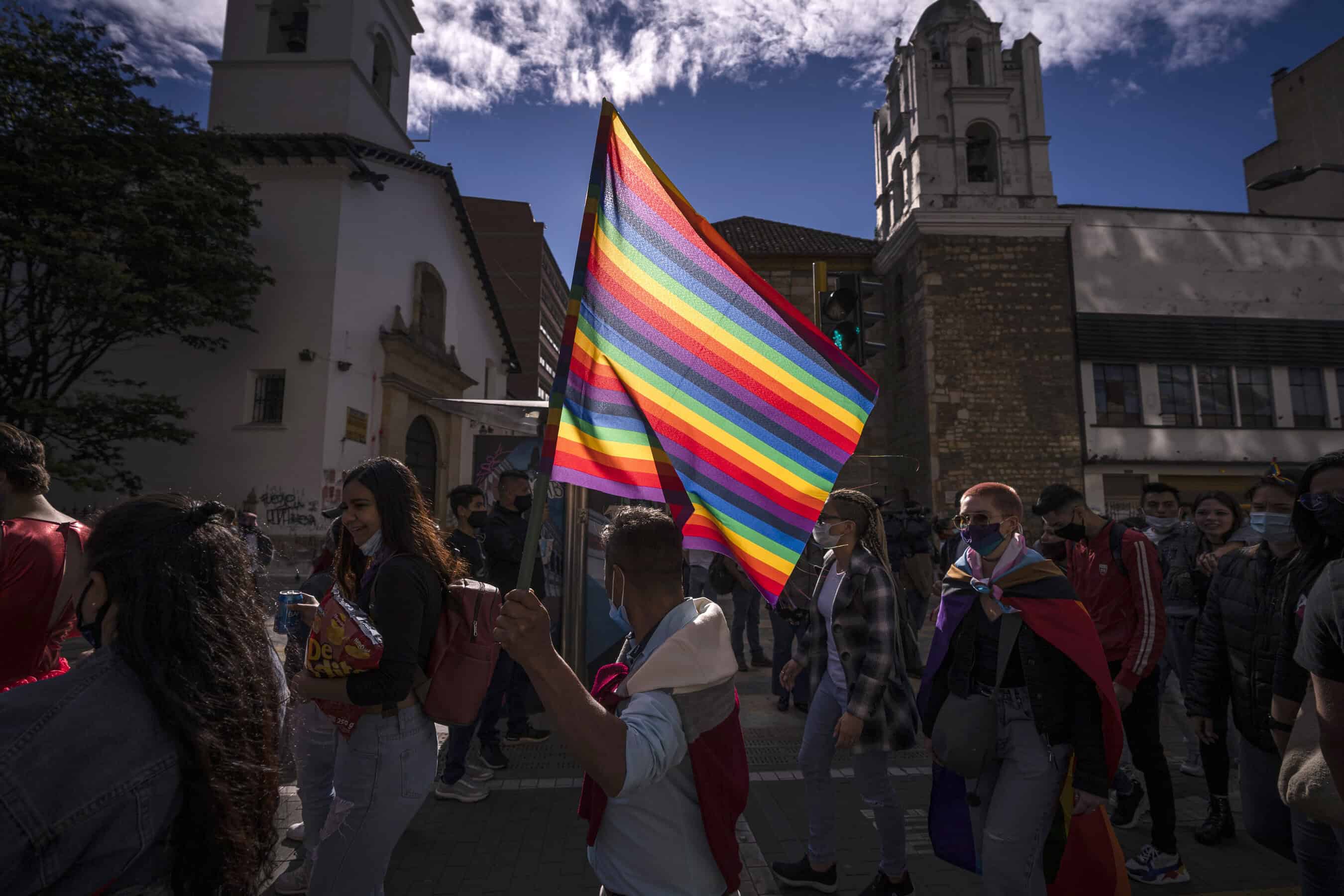
Colombia’s 2016 peace agreement was the first in the world to explicitly incorporate a comprehensive gender perspective that included sexual orientation and gender identity. Endorsed by more than 100 Colombian LGBTQ+ organizations, the accord recognized that LGBTQ+ people were among the victims of the country’s decades-long armed conflict.
All armed actors in Colombia committed gender-based crimes and exercised strict social control over the communities under their authority. This control was rooted in patriarchal norms that punished anyone who did not conform to traditional notions of masculinity and gender behavior. Within this framework, LGBTQ+ individuals were often viewed as undesirable or deviant and were subjected to stigmatization, sexual violence, persecution, and murder. Many were also targeted in so-called “social cleansing” campaigns aimed at eliminating those considered outside accepted social norms.
Historically, LGBTQ+ persons were excluded from peace processes. In Colombia, however, their rights were not only recognized but also integrated throughout the accord thanks to the active participation of LGBTQ+ activists and victims. The Gender Subcommittee established during the negotiations invited organizations such as Caribe Afirmativo and Colombia Diversa to provide testimony and help shape the text. Through their advocacy, victims educated negotiators about the violence they had experienced and pushed for protections tailored to their communities.
As a result, LGBTQ+ rights were incorporated across multiple chapters of the agreement, including land reform, political participation, drug policy, and transitional justice. The accord also expanded the traditional understanding of “gender,” recognizing that it encompasses diverse sexual orientations, gender identities, and gender expressions rather than applying exclusively to women.
The inclusion of LGBTQ+ victims and rights was a landmark achievement, but it also generated significant opposition. Conservative political leaders and sectors of the Christian and Catholic churches argued that the accord threatened the traditional family and promoted what they described as “gender ideology.” During the 2016 referendum on the peace accord, these groups mobilized support for the “No” campaign, framing the agreement as an attempt to impose such ideas on Colombian society. On October 2, 2016, the accord was narrowly rejected at the polls.
Following the referendum, negotiators revised portions of the accord to address concerns raised by opponents and secured approval of a final version. Several gender-related provisions were modified or clarified. References to “gender” were often replaced with language specifically on women; for example, “gender-based violence” became “violence against women,” and “gender equality” became “equality between men and women.” Direct references to the LGBTQ+ community were significantly reduced, and terms such as sexual orientation and gender identity were reframed within broader references to vulnerable or discriminated-against groups. Although protections against discrimination remained intact, explicit recognition of LGBTQ+ people was diminished in the final text.
Despite this, Colombia’s Truth Commission (officially the Commission for the Clarification of Truth, Coexistence and Non-Repetition) included in its final report a chapter on how the conflict disproportionately affected sexual diversities and gender. In this, they document how violence against such persons was not isolated or casual, but many times utilized as a form of punishment, social control, and correction by the different armed actors. The volume includes 25 testimonies that reflect not only the pain experienced by LGBTQ+ persons but their resistance and the dignity they exhibited despite these horrors. It describes the death threats, internal displacement, sexual violence, torture, and exile faced by this population. The Truth Commission recognizes the plural identities of the victims, including sexual orientation, gender, and ethnic identities.
Conclusion
The lived experiences of Marielle Franco, Natalia Lane, and LGBTQ+ victims of Colombia’s armed conflict reveal both the vulnerability and resilience of marginalized communities across Latin America. While violence, discrimination, and exclusion continue to threaten the lives and rights of LGBTQ+ people, these cases demonstrate that sustained activism can produce meaningful political, legal, and social change. Whether through securing accountability for political assassinations, establishing legal precedents that recognize anti-trans violence, or ensuring that LGBTQ+ experiences are acknowledged in peacebuilding efforts, these achievements represent important steps toward more inclusive democracies. Together, they underscore that lasting justice requires not only recognizing past harms but also creating institutions that protect diversity, dignity, and equal participation for all.