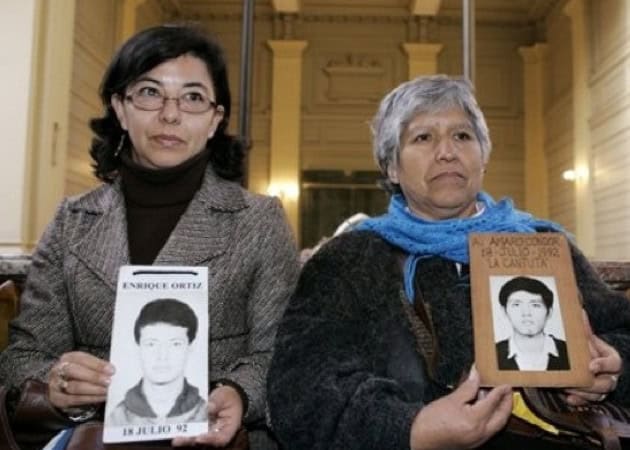

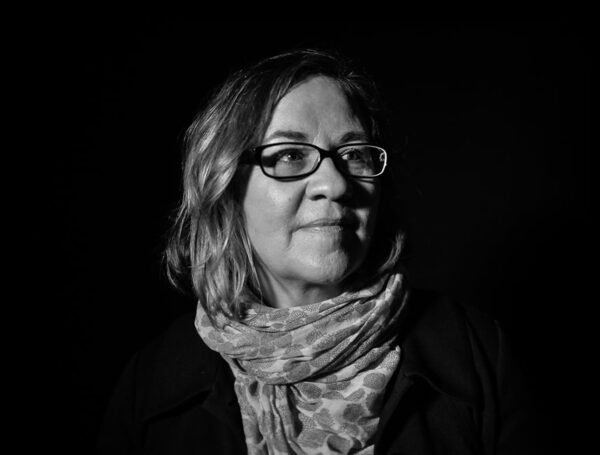
Gisela Ortiz was 19 years old in 1992 when her brother Enrique was forcibly disappeared from La Cantuta University by a military death squad, along with eight other students and a professor. I first met Gisela in 1994. Alberto Fujimori was at the height of his power, with a subservient Congress and a Constitution made to his liking after his April 1992 “self-coup.” I was struck by her raw courage and determination. For more than three decades, she has been a leading voice of the victims’ movement in Peru, demanding truth and justice for those, like her brother, who were the victims of state terror. In the afternoon of August 21, Gisela will appear before the Inter-American Court of Human Rights to speak out against a new amnesty law that could free those prosecuted for this and other grave human rights violations committed by government forces during Peru’s internal armed conflict. The Court convened this hearing to listen to the voices of the victims and their civil society allies, as well as of the Peruvian State, regarding the law.
This legislation is the latest attempt to hobble Peru’s precedent-setting efforts to hold perpetrators of grave human rights violations accountable. For nearly a decade, I researched Peru’s accountability efforts and monitored emblematic trials, including the 2007-2009 trial against Alberto Fujimori, who was convicted and sentenced to 25 years in prison for the Cantuta killings and the 1991 Barrios Altos massacre. Over the course of the past two decades, Peruvian courts have prosecuted more than 150 cases, including massacres, forced disappearances, extrajudicial executions, and sexual violence, and hundreds more cases await trial. The military and its conservative allies have long impugned these efforts. They portray themselves as the heroes who saved Peruvian democracy from Shining Path violence, defamed human rights lawyers representing the victims, and claimed they were the victims of political persecution.
The new amnesty law was passed in June by a small group of right-wing legislators, who took advantage of a congressional recess to approve the legislation with just a handful of votes. Victims’ groups, a wide range of civil society organizations, and international human rights groups, including WOLA, expressed their rejection of what was soon dubbed the “impunity law” and called on President Dina Boluarte to refrain from signing it into law. Likewise, the President of the Inter-American Court, Nancy Hernández López, called on Peru to immediately suspend approval of the controversial law until the Court could analyze its effect on the victims of the Barrios Altos and La Cantuta massacres. In both of these cases, the Court found the Peruvian state responsible, contributing to the prosecution and conviction of former president Alberto Fujimori, senior military officials, and members of the Colina Group death squad.
On August 13, in a flamboyant public ceremony, flanked by members of the armed forces, President Dina Boluarte defied national and international outrage and signed the amnesty law. Human rights lawyers like Gloria Cano and Carlos Rivera, who have represented victims of state-sponsored human rights violations, immediately rejected Boluarte’s decision because it undermines the right of the victims to access justice. Cano affirmed that by signing the amnesty law, Boluarte is in open defiance of a Court order. Cano noted the particular gravity of this action as the Court had already convened a hearing on August 21 to review the matter.
Unfortunately, this is not the first time Peru has ignored a ruling by the Inter-American Court of Human Rights. In 2023, the Court ordered Peru not to apply a controversial 2017 pardon to free Alberto Fujimori from prison, but it did so anyway. According to Rivera, “this establishes [Peru] alongside Venezuela and Nicaragua as countries that repudiate the international systems of human rights protection.”
Holding the State Accountable
Between 1980 and 2000, Peru experienced a brutal internal armed conflict between the Maoist Shining Path insurgency and the Peruvian State. A truth commission found that 70,000 people were killed and that 75 percent of the victims were Indigenous rural farmers. An estimated 22,000 people were victims of enforced disappearance, including Gisela Ortiz’s brother Enrique. Shining Path was found responsible for 54 percent of these abuses, while the State of Peru was found responsible for 35 percent.
Shining Path members were brought to justice (though many were killed, in many cases arbitrarily, during the conflict). No one from the State, however, was held accountable. Only a handful of cases were ever investigated, and the Peruvian Supreme Court generally remanded these to the military courts, where charges were usually dropped or minor administrative sanctions imposed. Impunity was made official state policy in 1995 when the Fujimori-controlled Congress passed two amnesty laws that prevented investigations of state agents for human rights violations.
It was only after Peru’s transition to democracy in 2001, in the wake of the Truth and Reconciliation Commission’s (CVR) recommendations, that emblematic cases of grave human rights violations could be prosecuted, particularly in cases of state-sponsored abuses.
The same year, the Inter-American Court issued a ruling in the Barrios Altos case, concluding that the 1995 amnesty laws violated Peru’s international obligations and lacked legal effect, a decision later upheld by Peru’s Constitutional Tribunal. Specialized human rights units were set up in the Public Ministry and the Judiciary to address human rights (as well as terrorism) cases, as recommended by the CVR. Even then, the first conviction was not handed down until 2006, when four police officers were found guilty of the forced disappearance of university student Enrique Castillo Páez.
Since then, more than 150 cases of massacres, extrajudicial killings, forced disappearances, and sexual violence have come before the Peruvian courts. Hundreds more cases are still pending, according to Peru’s National Human Rights Coordinator.
The Long Road to Justice
Boluarte touted that the amnesty law was necessary because military and police officials who “defended the homeland” have been “unjustly accused” and have had to face “endless trials” that affect them and their families. It is true that trials in Peru—and elsewhere—tend to take a long time. But in Peru’s case, they have been deliberately and endlessly drawn out, delayed, and obstructed, with the ultimate goal of undermining accountability efforts.
Delays in investigations and at the trial stage are a failure of the Peruvian legal system itself. By this, I do not mean that prosecutors and judges are to blame. I have met dedicated, honest professionals working in Peru’s Public Ministry and Judiciary. But political decisions over the past 15 years have undermined the ability of prosecutors and judges to do their jobs effectively. I base this conclusion on years of research on human rights prosecutions in Peru, starting with the 2007-2009 trial of Alberto Fujimori. For nine years, my research team and I monitored trials involving massacres, forced disappearances, sexual violence, and extrajudicial executions. Our research found that a critical element often not talked about by those favoring amnesty for military and police officials is the lack of political will in support of accountability.
While the transitional government of Alejandro Toledo (2001-2006) supported the special human rights units in the Public Ministry and the Judiciary, subsequent governments were less enthusiastic. Under Alan García (2006-2011) and in successive governments, funding for human rights investigations conducted by the Public Ministry was sharply reduced, limiting the ability of government prosecutors to act rapidly on the hundreds of cases it has on file. Those involved in these prosecutions, especially lawyers like Cano and Rivera, were demonized by government officials, who even went so far as to accuse them of working for the Shining Path. In 2010, the García administration attempted to impose an amnesty law, but it was overturned after national and international outcry.
Furthermore, the National Criminal Court, configured initially in 2005 to adjudicate cases of terrorism and state-sponsored human rights violations, was endlessly modified to shift its focus to other matters. As the Court was obliged to take on other complex cases, including drug trafficking, money laundering, and social conflict cases, judges had to juggle overloaded schedules, resulting in drawn-out human rights trials.
One example is the Accomarca massacre trial, which my research team and I monitored. The public trial lasted six years, from the first hearing in November 2010 to the delivery of the verdict on August 31, 2016. Another trial we monitored, involving the abuses that occurred at the Los Cabitos military base in Ayacucho in 1983—including illegal detention, torture, forced disappearance, extrajudicial executions, and sexual violence—took more than five years from start to finish.
Another alarming finding is that many of those convicted skipped their sentencing hearing and have never been apprehended. Two senior military officials who were convicted as the intellectual authors of the Accomarca massacre, including General Wilfredo Mori Orzo, head of the Ayacucho Military Zone at the time, have been fugitives for nearly a decade.
The Circle of Impunity
President Dina Boluarte, who assumed office in December 2022 following her predecessor Pedro Castillo’s failed coup attempt, has maintained a hold on power, despite her unpopularity. She has managed this thanks to a combination of violent repression of social protest and a tacit alliance with a loose coalition of legislative blocs in Congress. In the context of protests demanding new elections in the early months of her presidency, 50 people were killed by security forces and hundreds more were injured. No one has been held accountable, resulting in a chilling effect on protests against an unpopular president. For its part, the also unpopular Congress has managed to use its power to co-opt key democratic institutions, including the Constitutional Tribunal, destroy mechanisms of checks and balances, and undermine the rule of law. This slide towards authoritarianism has been widely criticized by scholars, civil society organizations, and international organizations like the Inter-American Commission on Human Rights.
By supporting the amnesty law, Boluarte is seeking to consolidate her pact with the far-right members of Congress who back the military and have long sought to end criminal prosecutions against military officials accused of committing massacres, forced disappearances, torture, extrajudicial executions, and sexual violence.
Among these legislators are retired military officials who were themselves involved in the counterinsurgency war. Some, like José Williams, were brought to trial. In his case, he was tried along with more than two dozen military officials and soldiers for the 1985 Accomarca massacre. Williams’ superiors were convicted, as were soldiers operating under him, but he was acquitted and went on to seek a career in politics. He and former Navy admiral Jorge Montoya are among the most vocal advocates of the amnesty law.
On August 19, Peru’s Constitutional Tribunal issued a ruling that sitting presidents cannot be investigated, effectively shuttering—at least for now—investigations into Boluarte for the deaths of 50 people at the hands of security forces during protests against her government in 2022 and 2023. With this, the circle of impunity, from past to current abuses, would seem to be complete.
Possibilities of justice remain
As Gloria Cano has noted, the ultimate decision to apply the amnesty law rests with Peru’s judges. Two military officials convicted in the 1988 Cayara massacre have already filed a petition to have the amnesty law applied to their case. Based on the Inter-American Court’s doctrine of conventionality control, judges have the power to refuse to apply the law. Peru’s adherence to international law and international treaties is enshrined in its Constitution. Several judges have applied this reasoning in relation to another law passed last year, which sought to free human rights perpetrators based on the flawed argument that cases of crimes against humanity, which occurred before 2002 when the Rome Statute came into force, should be prescribed. The Inter-American Court will likely issue a ruling requiring Peru to nullify the amnesty law or refrain from applying it. And victims like Gisela Ortiz will continue to demand their rights in national, regional, and international arenas to truth, justice, and memory.