*This information in this article comes from interviews done with civil society, local officials and members of the peace table during the November 2024 Congressional visit led by Rep. Hank Johnson and seven follow up interviews WOLA did in the past two weeks.
During the last weekend of March, violence engulfed Buenaventura, claiming several lives in Colombia’s most important port city. Among the victims was 24-year-old rising Afro-Colombian soccer star Vladimir Bravo Núñez, who was shot by assailants while purchasing food in the city’s La Independencia neighborhood. The latest wave of violence, which began after the truce between the two principal urban illegal armed groups broke down on February 5, has led to indignation and reignited the #SOSBuenaventura calls.
Amidst the violence, a warning began to circulate on WhatsApp calling for a “Pandemiaplomo”—that is, a COVID-style lockdown under the threat of being shot (“plomo” is slang for gunfire). Illegal armed groups also issued their own order, stating they would shoot anyone in the streets on sight.
The current crisis in Buenaventura arises in spite of efforts made by the Petro government to advance peace in Colombia. While the socio-legal table set up by the national government in July 2023 with the illegal armed groups seems to be advancing, violence, abuse, and fear remain rampant. On March 13, the government reached an agreement with these groups to stop recruiting minors. This almost two year-long negotiation—the first peace effort to attract media attention as part of the Total Peace policy since Petro took office—has seen both progress and setbacks. At its high points homicides were reduced, invisible barriers lifted and persons felt free to go about their daily activities without fear. During its low points, fear reigned and people despaired. Despite its flaws, it remains the best path for dismantling the illegal armed groups that terrorize the residents of this city.
A Port with A Long History of Violence
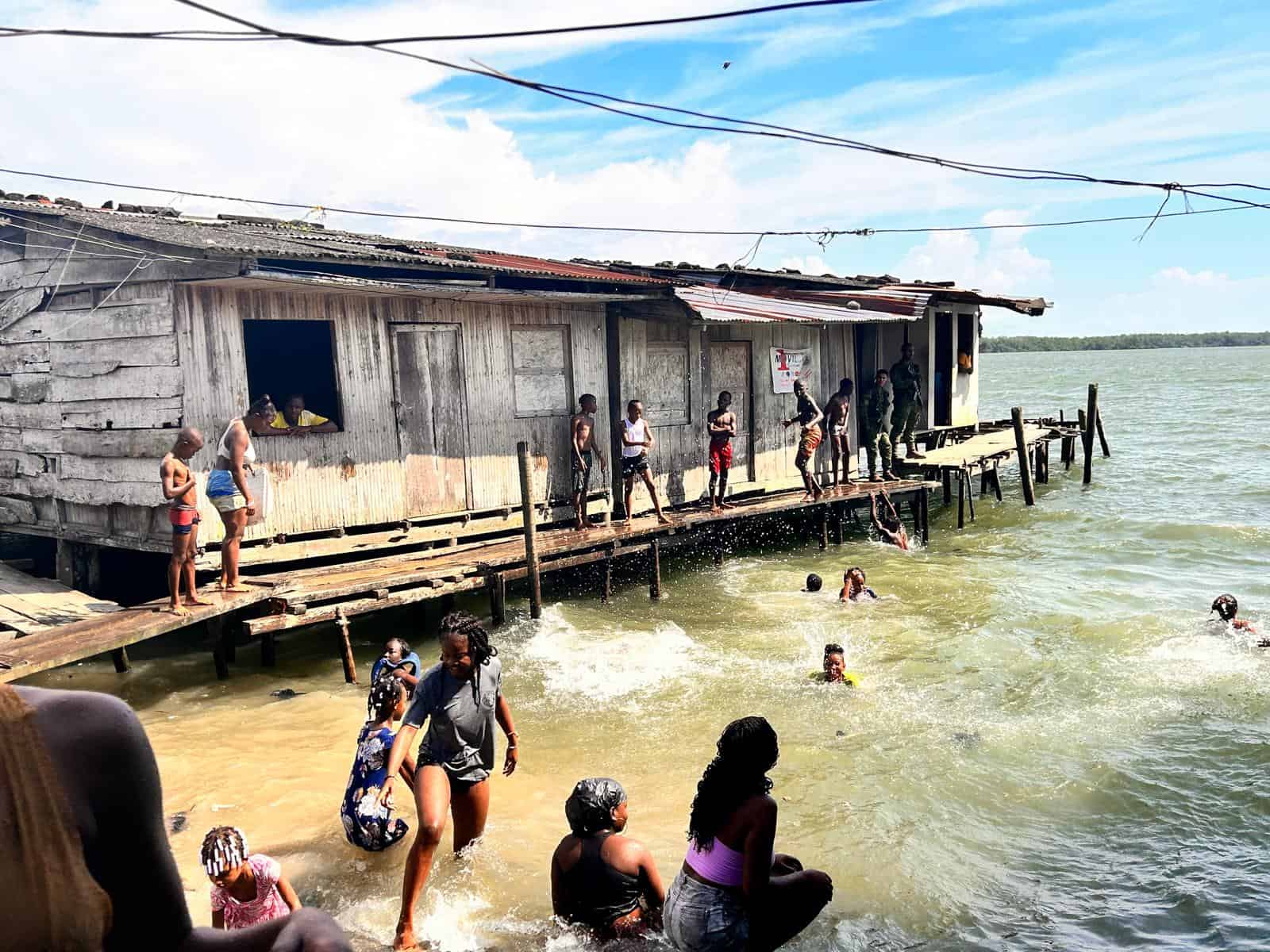
Colombia’s main port is located on Cascajal Island in the District of Buenaventura on Colombia’s Pacific Coast. The total population of the district is over 450,000 people, most of whom live on the island and the surrounding urban settlements on the mainland. In Buenaventura, over 88 percent of the inhabitants are Afro-Colombians, where over 82 percent live in poverty, with 41 percent in extreme poverty, and the unemployment rate hovers at around 66 percent. Many of Buenaventura’s residents come from the Valle del Cauca and Chocó River basins, which are home to the ancestral lands of many traditional, rural Afro-descendant communities in Colombia. A smaller Indigenous Emberá-Wounaan population also lives in Buenaventura, many of whom are internally displaced from their territories in the southern Chocó department.
An extremely biodiverse area with fertile lands and complex geography, its geostrategic location makes it an ideal drug-trafficking hub. The area suffers from endemic violence due to internal armed conflicts with the FARC (now FARC dissidents), ELN guerillas, AGC (Gulf Clan paramilitaries), drug traffickers, and local urban criminal bands. These Colombian illegal armed groups are at times subcontracted by the Mexican Jalisco and Sinaloa cartels to carry out drug-trafficking activities.
In December 2023, Colombia’s Human Rights Ombudsman’s Office reported that illegal armed groups were present in 112 of Buenaventura’s 136 neighborhoods, where they have committed serious human rights violations. Since 2018, this same office has issued thirteen early warning alerts for Buenaventura, which contain recommendations to the security forces and civilian authorities for how to safeguard civilians in light of imminent threats.
From the 1980s until the late 2000s, illegal armed groups like the FARC and ELN guerrillas, and later the Calima Bloc of the Self-Defense Forces of Colombia (AUC), controlled Buenaventura. In response, in the 2000s, the Colombian armed forces militarized the port area. This militarization, however, has done little to prevent homicides and mass atrocities, including “chop houses” (where victims have been dismembered alive), forced internal displacements, and the persecution of social leaders and any other individuals that the illegal armed groups have viewed as enemies or “military targets.”
Colombia’s structural racism undermines the lives of Afro-descendants throughout the country, while its classism devalues the lives of poor rural communities and internally displaced persons. In Buenaventura, these underlying realities, combined with the perception that the port is merely an economic asset where commercial interests and systemic corruption rule, helps explain why such severe abuses occur in this highly militarized area.
In 2016, the armed, organized criminal group “La Local” dominated drug operations in the city and its fluvial areas. Members of “La Local” terrorized the local population, extorting businesses and kidnapping people for profit. The group fragmented in 2019 after the Colombian national police arrested and jailed its leaders. Disagreements regarding who should lead the group resulted in the formation of two rival factions that became known as the Shottas and the Espartanos. Now bitter enemies, these factions fight over illicit commercial interests and territory. With over 1,500 members– primarily Afro-Colombian youths– they operate in 40 neighborhoods and nine villages. Meanwhile, the groups’ leaders control these operations from jail cells.

The larger illegal armed groups operating in the region—FARC dissident groups, ELN guerillas, and Gulf Clan/AGC—subcontract jobs and parts of their operations to these urban criminal groups. These groups are present in the rural areas surrounding the port, all along the Pacific coast, and in the region’s interior. In addition to the Shottas and Espartanos, smaller illegal urban groups exist, including the Chiquillos.
These urban criminal groups impose “invisible borders” and curfews on residents. An invisible border is a designated area established by a group that individuals cannot cross without permission. Crossing it may result in death. Shootings and other forms of violence are concentrated at night, following the enforced curfews. This environment generates fear and limits the movement of locals, affecting their lives and livelihoods. A truce brokered in 2022 led to a decrease in the homicide rate, removed the invisible borders, lifted the curfews, and resulted in fewer kidnappings. However, when it broke, violence resurged, with killings taking place on all sides and civilians caught in the crossfire.

Pares 2023 graphic shows the drop in homicides after the 2022 truce.

Fuente: Gicri Policía Nacional. Elaboración: Unidad de Monitoreo y Evaluación FIP.
The graph shows how the truce and the installation of the socio-legal table led to a drop in homicides. This shows that a future agreement could significantly reduce homicides and violence.
Total Peace Efforts Offer a New Way Forward
In 2024, the Petro government recommitted to the urban peace process aimed at de-escalating violence and establishing a pathway for armed groups to transition into civil and democratic life. Despite an initial push by Pacto Historico Members of Congress, the legal framework needed to advance negotiations with the urban illegal armed groups never materialized. This included failing to pass a law to allow judicial authorities to lift warrants and provide incentives for demobilization. As a result, the situation remains highly volatile. The two groups remain heavily involved in their illicit activities, relying on the port to operate.
On March 13, the Shottas and the Espartanos reached an agreement with the government to stop the recruitment and use of children and adolescents in their illegal activities. In this deal, the illegal groups agreed to stop all “physical, psychological and sexual violence against boys and girls.” Parallel to this, the police announced that it would reinforce security by deploying one hundred officers to the port, including some specialized in intelligence, counter-narcotics, and investigation.
This agreement is a step towards reducing the involvement of minors in the rampant violence affecting the country’s primary international port, which recently launched a maritime trade route with China. It is a minor victory for the Colombian government, as achieving total peace with the country’s long list of illegal armed groups, each with its unique complex characteristics, has proved daunting. The question now is how to transform Buenaventura’s urban peace dialogue into tangible results?
To answer this, we asked stakeholders (civil society, government, and locals) for their views on the recruitment agreement, the challenges the process encounters, and what the national government and international community could do to strengthen the process.
Stopping Forced Recruitment is Vital to Peace
First, there is a broad consensus that ending the forced recruitment of minors is vital for advancing peace. However, while strides have been made in urban peace processes, forced recruitment continues to be a concerning reality. The recruitment of children and youth is one of the most egregious violations in Buenaventura, in which children as young as ten are recruited to join the ranks of illegal groups. The lack of employment and desperate socio-economic conditions faced by community members provide fertile ground for young people to be recruited. The illegal groups persuade young people to join them by presenting themselves as a “solution” to poverty, enticing youth with nice clothes, shoes, and weapons.
Young people who refuse to join, on the other hand, receive death threats and many are forced to leave the city. In cases where an adolescent or child becomes a target, the entire family is often forced to flee as the illegal armed group may occupy their home and seize their assets and belongings. Adult women, adolescents, girls, and young women are particularly affected by the situation as they are subjected to sexual and other forms of violence and exploitation.
Strategies like implementing community protection programs, creating safe spaces for children, and fostering coordination between institutions and civil society organizations have reduced children’s vulnerability to recruitment. Furthermore, raising awareness of the issue has enhanced institutional commitment to prevent and address cases of forced recruitment.
Obstacles Facing the Urban Peace Process
The urban peace process faces legal and structural challenges, including a lack of legal framework, distrust, corruption, weak institutions, and the persistent influence of illegal armed groups in various neighborhoods. For the process to succeed, all parties involved must demonstrate a serious commitment to ensure the effective implementation of any future agreement. As was referenced above, another significant obstacle is that the Colombian Congress has not passed the necessary legislation to provide the required legal framework for full progress. This deficiency undermines the trust established at the negotiation table and leaves the process vulnerable to the ongoing dynamics of violence in the city.
Communities are also distrustful of the process, as armed groups continue committing crimes and abuses even while dialogue roundtables are underway. Extortion, forced disappearances, enforcement of invisible borders, assassinations, sexual violence, and forced recruitment persist. Cultural and ancestral practices, such as funeral wakes, have been restricted in specific neighborhoods, where armed groups forbid people from conducting these rituals in their homes, illustrating the pervasive imposition of violence in daily life.The contradiction between what is discussed at the peace tables and the reality on Buenaventura’s streets fosters widespread skepticism and erodes hope.
This is compounded by the public security forces’ inability to protect residents and their lack of adequate action when violations occur. While authorities may patrol certain areas, locals point out that the illegal armed groups exert absolute control over many neighborhoods, displacing security forces. Complaints made by citizens are ignored and can lead to direct reprisals, including threats against those who dare to speak out. In some instances, citizens have even been compelled to remove their security cameras from their homes to avoid retaliation from criminals.
Many in the community point to the corruption, complicity, and omission of some members of the public forces, the region’s political leaders, and members of the legal branch as highly problematic. News reports indicate that some authorities have maintained working relationships with the illegal armed groups, such as the case of the director of Buenaventura’s technical investigative unit, former and current mayors, judges, and prosecutors. In some cases, the regional administration and certain judges do not send criminals to prison, allowing them to continue to commit crimes with impunity. Worse yet, many of these leaders continue to direct illicit activities from prison, perpetuating the cycle of violence and chaos. These situations foster local distrust in the security forces and institutions, with people reluctant to report crimes for fear of reprisals.
Another challenge is the illegal armed groups’ connections to other regions. Some leaders of the groups operating in Buenaventura reside in other Colombian cities or even abroad. This complicates conflict resolution, as it ties the violence to illicit economic dynamics. In the realm of drug trafficking, peace is not a priority, since this industry thrives on war and illegality.
The inability of the national, regional, and local governments to meet residents’ needs is often cited as the reason illegal armed groups continue to thrive. This inability is also an obstacle to their demobilization. The lack of social investment in education, health, aqueducts, housing and employment, and real survival alternatives impedes the process. A massive 2017 Civic Strike paralyzed the port city for 22 days, resulting in agreements with the national government to address the inequality gap for Buenaventura’s residents who have yet to advance sufficiently in meeting these needs. Persons interviewed by WOLA indicate that they want other options for survival for themselves and the communities in their neighborhoods. Victims of the groups point out that institutions are too weak and poor at coordinating efforts that can put in place care and protection routes for victims of forced recruitment.
Locals also point to multinational corporations and the private sector more broadly as complicit in the violence. While Buenaventura is responsible for facilitating 48.4 percent of Colombia’s exports, those benefiting from the commerce do not invest in the local communities. Some locals believe it is in the private sector’s interest not to help them so that they will become displaced, leaving room for the port operations to expand.
The Way Forward
The violence and conflicts in Buenaventura are structural and endemic. There is no quick or easy fix. The international community must embrace and provide political support to the socio-legal negotiations to ensure their progress and facilitate the demobilization of illegal groups. The international community, along with national, regional, and local governments and civil society, should support Buenaventura’s civil society groups and the Catholic Church in their efforts to broker peace, promote justice, and address the significant socio-economic disparities in the region.
Here are some additional steps that can be taken to impact the violence and advance the socio-legal table in Buenaventura:
1) The Colombian Congress should pass a legal framework that ensures judicial security for all participants in the socio-legal effort. According to Pares, “the lack of a solid regulatory framework, the dependence on voluntary agreements, and the absence of strategic planning highlight the urgent need for sustainable measures to consolidate peace in the region.”
2) The national government should prioritize and carry out the 2017 Civil Strike agreements. It should invest as much or more in the people of the port as it does in its commercial operations.
3) Social, business, government, national, departmental, and local sectors should unite to implement the Special Comprehensive Plan for the Development of Buenaventura 2040 (PIEDB 2040). This involves advancing the Fund for Buenaventura and changing its executor, implementing social projects focused on people rather than solely on the port’s infrastructure, strengthening the institutional framework of the district of Buenaventura, enhancing the judicial system, and investing in water, basic sanitation, business-oriented ventures, education, and health. Additional efforts would include campaigns against corruption and establishing schools that provide political training and leadership.
4) The illegal armed groups, the Shottas, and the Espartanos, should demonstrate that they take the process seriously by ceasing violence towards each other and the general populace. They should stop forcibly recruiting minors, committing human rights abuses, and gender-based violence. Also, they should cease their criminal activities toward the locals, namely extortion and population control.
5) Corruption within the security forces and local judicial institutions must be addressed. Public forces should maintain their presence in neighborhoods experiencing conflict. Recent intelligence scandals need resolution, and new players should be introduced to build trust with the local population. The authorities must apprehend those responsible for their financing and assets and ensure a more substantial national government presence in the territory.