
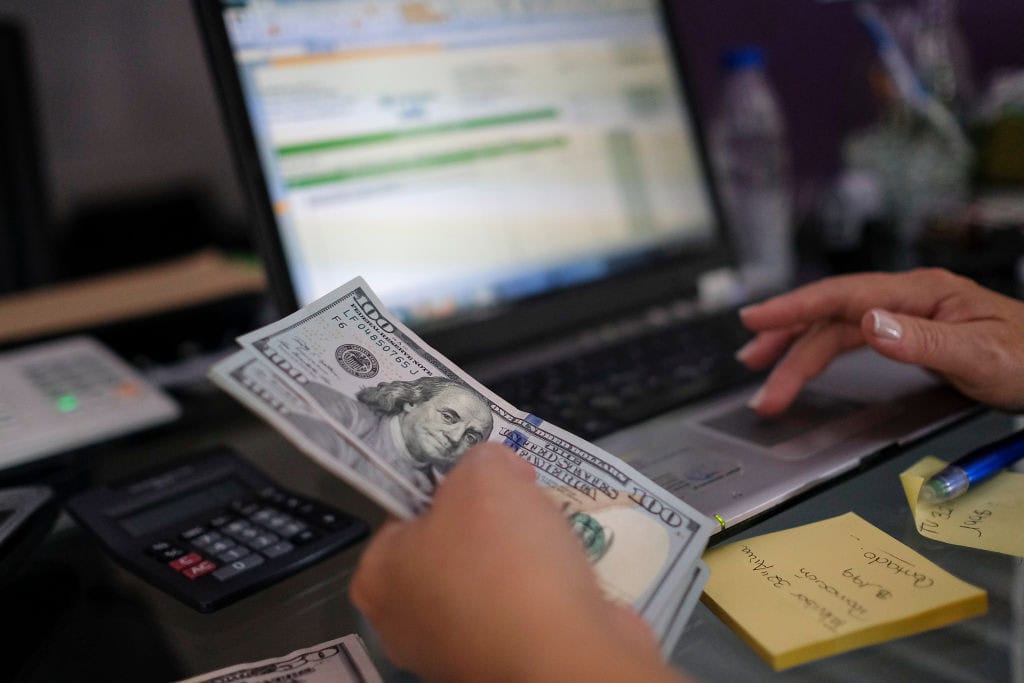


On September 17, an amendment to the State Department Reauthorization Bill, including the “PANA Act” – the Preserving Accountability for National Assets Act – secured unanimous approval during the House Foreign Affairs Committee markup. The PANA Act establishes a Venezuela Restoration Fund, allowing for the money recovered from corrupt Venezuelan individuals through legal and administrative procedures in the U.S. to be protected and returned to Venezuelans with a clear set of purposes, following international standards for asset recovery.
What exactly is the PANA Act, and why has it received bipartisan support? How could the creation of a Venezuela Restoration Fund help strengthen democracy, protect human rights, and advance transparency at a moment of deep crisis for Venezuelans? We answer these questions and more below.
The U.S. is a key destination for money stolen from Venezuelans
Asset recovery is a procedure used to identify, locate, seize, pursue, recover, and repatriate assets obtained through corrupt means, thereby compensating the country that has been victimized by these activities. Federal agencies employ civil, criminal, and administrative forfeiture legal mechanisms to recover assets acquired through criminal conduct, which contributes to dismantling criminal operations and protecting the U.S. financial system from being exploited by corrupt foreign actors.
Corruption undermines the rule of law and weakens institutions designed to protect human rights, enabling the abuse of power, impunity, and selective access to justice. It diverts public resources away from essential services such as health, education, and social protection, disproportionately harming marginalized groups and exacerbating inequality. Venezuela is an emblematic case of grand corruption in the Western Hemisphere, in which the complex humanitarian emergency and collapse of public services are directly connected to the dismantling of democratic institutions, fueling the forced migration of nearly 8 million Venezuelans.
According to Transparency Venezuela, there are 254 cases of corruption involving Venezuelan politicians in 31 countries, amounting to USD $64.6 billion in assets like yachts, vehicles, watches, private jets, gold, horses, real estate, cash, and bank accounts; the U.S. is one of the top destinations for these assets. According to the Venezuela Asset Recovery Initiative (INRAV, in Spanish), an independent civil society organization that has advocated for U.S. legislation on this issue, the U.S. Department of Justice has opened 72 legal cases, resulting in an estimated $4 billion in forfeiture orders. The large majority of these assets have been forfeited in Florida and Texas. It is important to note that the U.S. generally retains a portion of the assets recovered to cover the costs incurred in confiscating them; therefore, it is unclear how much money will be available after complying with these legal requirements.
What the fund is and isn’t for
If this bill were to be enacted, the Venezuela Restoration Fund would be created in the Treasury Department and administered by the Department of State, under the rules established by Congress and the internal governing rules that these agencies determine. PANA establishes four specific purposes for which the fund can be used: i) strengthening democratic governance and institutions, ii) defending internationally recognized human rights for the people from Venezuela, including documentation of crimes against humanity and human rights violations; iii) supporting independent media, and iv) combating corruption and improving transparency and accountability. The fund is not a substitute for foreign assistance.
The U.S. is a party to the United Nations Convention Against Corruption (UNCAC) and co-hosted the Global Forum on Asset Recovery (GFAR) in 2017, which led to the development of the Principles for the Disposition and Transfer of Confiscated Stolen Assets. This serves as a guide on returning stolen assets to benefit the people of the nations harmed by the corrupt conduct. If enacted, PANA would be implemented in accordance with U.S. and international law and standards.
Guardrails against discretionality and the role of congressional oversight
Once federal agencies have recovered assets, they have a certain margin of discretion in how the funds are used. Therefore, PANA provides guardrails, limiting the purposes for which the funds can be used and making sure these assets are returned to Venezuelans. PANA also includes a reporting requirement for the Secretary of State, who must submit information to Congress on the funds deposited into the Venezuela Restoration Fund and provide a summary of the expenditures. Currently, the bill does not require the State Department to consult with members of Venezuelan civil society to determine how to allocate the funds in accordance with the purposes set out in the legislation. However, there is an opportunity for this to be added—and it should be added—if the Senate takes up the legislation.
The Fund enjoys bipartisan support
The idea of creating a fund of this nature has enjoyed bipartisan support. In fact, the first time a bill included language regarding efforts to recover assets stolen from the Venezuelan people was in the VERDAD Act of 2019. In 2021, PANA was first introduced in the Senate, and then again in 2023, by Senator Ted Cruz, along with a group of co-sponsors, as a Republican-led initiative.
In 2022, PANA was also introduced as a Democratic led initiative in the House. Likewise, in the aftermath of the July 28, 2024, election, Senators Ben Cardin and Tim Kaine announced that they would introduce the VERDAD Act to hold Maduro accountable. This proposed legislation also included the creation of a fund to hold forfeited assets from legal cases related to Venezuela, which would be used for humanitarian assistance. During the State Reauthorization Markup (min. 4:54:49), ranking member of the House Foreign Relations Committee, Gregory Meeks (D-NY), and Chairwoman of the Subcommittee on the Western Hemisphere, María Elvira Salazar (R-FL), publicly supported PANA.
Transparency and anti-corruption efforts are crucial
The only reason there are nearly $4 billion in forfeited orders from Venezuelan corrupt actors in the U.S. today is that U.S. institutions have been unwaveringly committed to transparency and going after corruption. However, on February 5, 2025, the Office of the Attorney General issued a memorandum stating that the “Task Force KleptoCapture, the Department’s Kleptocracy Team and the Kleptocracy Asset Recovery Initiative, shall be disbanded,” and that prioritization will be given to investigations targeting cartels and transnational criminal organizations instead. As experts in the field like Alexis Loeb have warned, dismantling these units at DOJ has serious implications: “the laundering of corruption proceeds through the U.S. economy creates security risks and market-distorting forces,” and the expertise built by those anti-kleptocracy teams cannot be easily replaced or rebuilt.
For the purposes of countering corruption from Venezuela, it is also worth noting that in March, the Treasury Department announced the suspension of enforcement of the Corporate Transparency Act (CTA) with regard to domestic reporting companies. Transparency International warned that this would make the U.S. “a magnet for foreign criminals, from drug cartels to fraudsters to terrorist organizations”, allowing them to evade anti-money laundering laws by setting up their operations inside the U.S.
Undermining the economic pillar of support of a de facto government that is responsible for gross human rights violations in Venezuela and protecting assets seized in the U.S. as a result of corruption and returned to Venezuelans are powerful ways in which the U.S. can support Venezuelans. This can only be achieved if the rule of law is respected in the U.S. and laws to combat corruption are also resolutely upheld domestically.
What’s next?
Now that the House Foreign Relations Committee has advanced a complex and controversial process to reauthorize and restructure various authorities within the Department of State, it will proceed to the full chamber for consideration. As a possible government shutdown looms on the horizon, it is unclear when that vote will take place. If passed by the House, the legislation then moves to the Senate. The Senate is unlikely to adopt the House version; therefore, the two chambers must reconcile differences through a Conference committee.
There is still a lengthy process ahead, and this legislation is just a small part of a much larger bill. However, this is the first time the PANA Act has been close to becoming legislation, and the vote during the markup shows that the idea of a Venezuela Restoration Fund enjoys bipartisan support. Whether it is this vehicle or another in the future, it is clear there is backing for mechanisms to ensure that money from corruption is returned to the people harmed by these criminal actions.